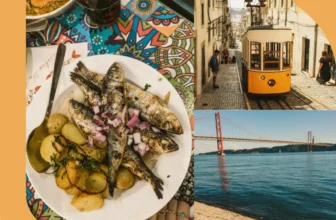


Lisbon is one of those cities that looks absolutely perfect in the photos. You’ve got the wonderful streets, the yellow trams, the food, the views… what could possibly go wrong?
Well, quite a few things.
I’ve learned that a bit of planning makes a world of difference in Lisbon. The hills are far steeper than they appear, some of the most popular sights have absolutely horrific queues, and if you don’t pick the right hotel, your walk can easily become a daily workout.
And then, of course, there are the tourist traps (Lisbon has a plethora of them).
So if you’re visiting for the first time, here are 20 things to avoid in Lisbon and a few things you should know before you go.
1. Not Booking São Jorge Castle Tickets in Advance
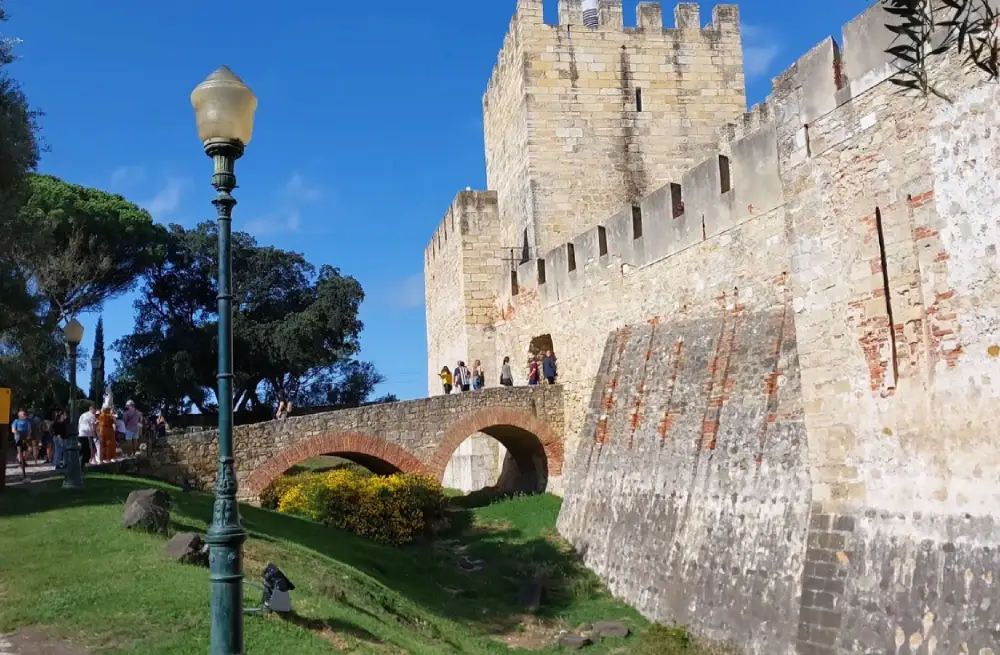
São Jorge Castle is one place you wouldn’t want to miss in Lisbon. It’s perched right above the city and offers superb views over the rooftops and down the Tagus.
The problem is everyone wants to go there.

During busy periods, the ticket line can get absolutely LONG, especially when it’s sunny.
You can save yourself the bother by buying your tickets online before you arrive. That way you can just walk straight in when you get there rather than spending your morning queueing up.
And given that the castle sits on one of Lisbon’s highest hills, you’ll probably be glad to have one less thing to worry about.
2. Wearing the Wrong Shoes

You may well want to bring some smart shoes for a trip to a European city, but Lisbon isn’t really the place for heels.

The streets are absolutely thronged with uneven cobbles, and those patterned pavements can be a right pain when they’re wet.
Given all the hills… best to leave the uncomfortable shoes at home.
Bring a comfy pair of sneakers with good grip. You’ll be walking A LOT! I’ve been wearing my Nike Revolution lately, and they’ve been great. I’ll leave an Amazon link here if you want to check them out too!
You can still look good, just ensure your feet are comfortable enough for the day.
3. Ignoring the Cruise Ship Schedule

There’s something many first-time visitors to Lisbon don’t realize. It is a cruise port, so you can often have several large ships in port on the same day.
This brings thousands more to the same attractions, same restaurants, same streets.
So don’t start planning your sightseeing until you’ve checked the Lisbon cruise ship schedule.
If a few ships are arriving at the same time, then head for a quieter part of the city or take a day trip outside the city.
It doesn’t necessarily mean empty streets, but it will certainly help you to avoid some of the biggest crowds.
4. Underestimating Lisbon’s Hills
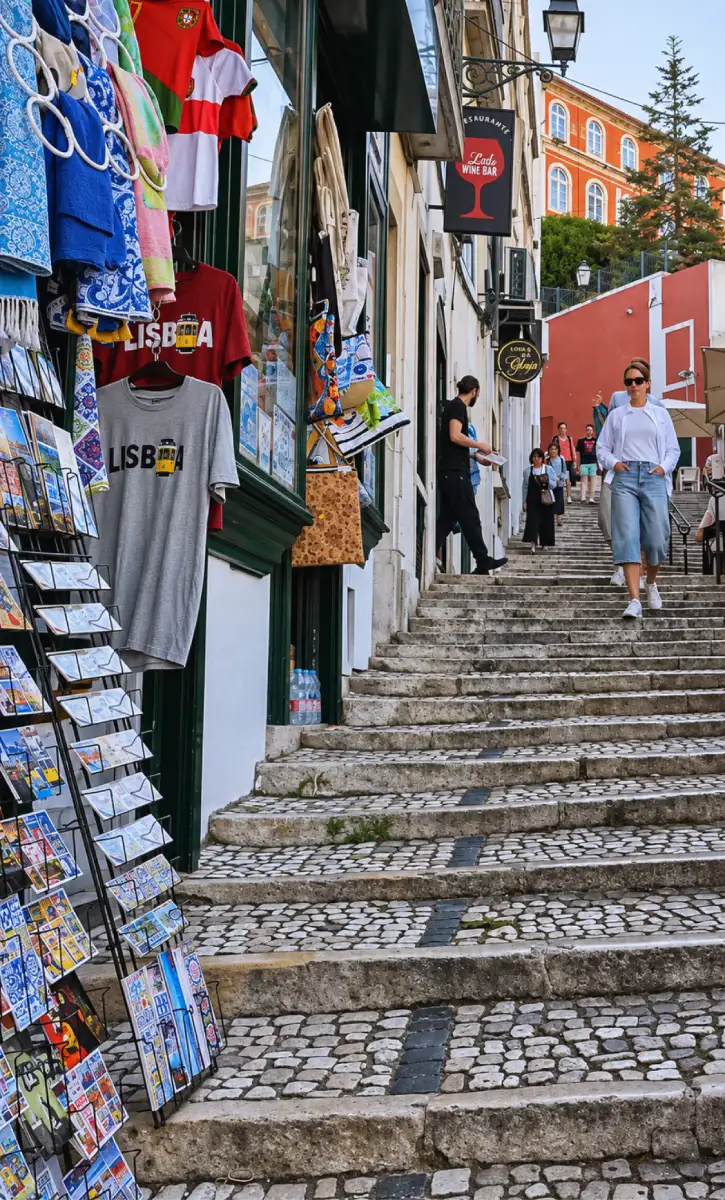
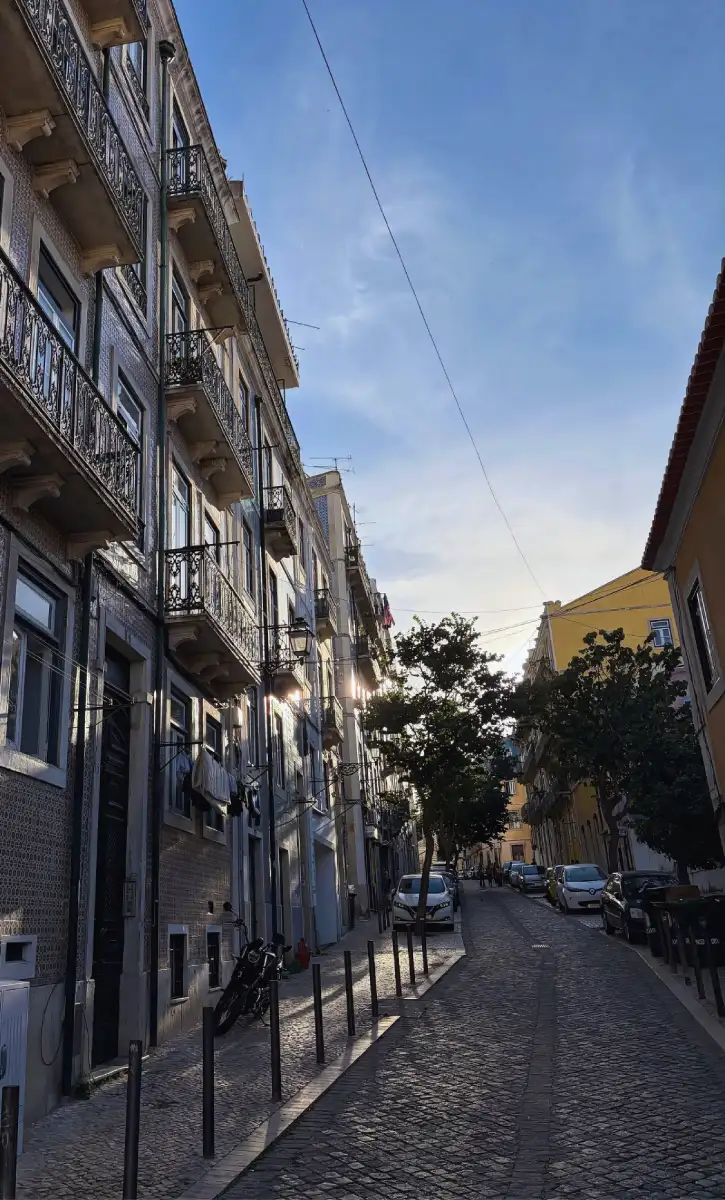
Lisbon is famous for its seven hills, and trust me, you’ll become very familiar with them.
Alfama and Graça are particularly hilly, with narrow streets, steep staircases, and viewpoints that seem to take forever to reach.
It’s beautiful, but walking uphill in the summer heat can get exhausting FAST.
I wouldn’t plan an entire day of walking between distant viewpoints, especially in July or August.
Instead, group nearby attractions together, carry water, and use public transport when you can.
The trams are useful for getting uphill, and tuk-tuk tours can be a fun way to explore some of the steeper neighborhoods while learning about the city.
Save your energy for enjoying Lisbon, not just reaching the next stop.
5. Forgetting That Some Attractions Close on Mondays
Imagine setting aside an entire morning to visit Jerónimos Monastery, only to arrive and discover it’it’sosed.
Not exactly how you want to spend your vacation.
Several major attractions in Lisbon close on Mondays, including Jerónimos Monastery and Belém Tower.
Other museums and restaurants may have different weekly closing days.
Before finalizing your itinerary, check the official opening hours for every attraction you really want to see.
I recommend doing this before booking any tours or timed tickets. It only takes a few minutes and can save you a wasted journey across the city.
6. Being Too Relaxed With Your Belongings
Lisbon generally feels like a safe city to explore, but pickpocketing is something tourists should take seriously.
Busy tram stops, crowded streets, and public transport are places where you need to pay attention.
Tram 28 is particularly worth being careful on, especially when everyone is standing shoulder to shoulder.
A few habits can make a difference:
- Keep your phone and wallet out of your back pockets.
- Carry your bag zipped and in front of you in crowded places.
- Don’t leave your phone sitting unattended on a restaurant table.
- Keep your backpack close instead of hanging it on the back of your chair.
There’s reason to spend your entire vacation worrying about theft. Just be sensible with your valuables.
7. Paying Full Price Every Time You Ride a Tram

Buying a ticket directly on the Lisbon tram is the easiest option, though it’s one of the more expensive ways of getting around.
In 2026, a single tram ticket purchased on board is €3.30.
Compare that to using a rechargeable Navegante card, where a zapping journey on Carris is €1.72.
If you’re doing several rides in one day, the 24-hour Carris/Metro ticket is €7.25.
That’s a far better option if you’re doing a full day of sightseeing.
There’s also the Lisboa Card, which covers public transport and entry to several attractions. It’s worth considering if you plan to visit a few paid sites.
I always recommend looking at the various options before your first day out, as paying the premium for every tram ride adds up quickly.
You can check the latest prices on the official Carris website.
8. Eating at the First Restaurant You See on Rua Augusta

Rua Augusta is a busy pedestrian street full of shops, outdoor restaurants, and tourists.
It’s an area where you have to be a bit selective as to where you eat.
Some places have huge menus with photos of every dish, flashy decorations, and staff encouraging people to sit down.
That doesn’t always mean the food is good, so I like to check reviews before ordering.
My favorite trick is to walk two or three streets away from the busiest tourist areas.
Look at the menu, check out the recent Google reviews, and see if the food is worth it.
Lisbon has some great places to eat. You don’t have to go for the first one with an empty table.
9. Tipping Like You’re in the United States
If you’re American, that one might surprise you.
Tipping 15% or 20% is absolutely not expected in Portugal.
Staff get paid wages at the restaurant, and tipping is generally something you do if you’re happy with the service.
You can total up the bill, leave a euro or two, or just pay the amount indicated.
There’s absolutely no need to feel even a little uncomfortable about not leaving a large tip.
I think it’s important to be aware of local customs when you’re traveling. What is normal in one country isn’t necessarily the same in another.
10. Not Trying Traditional Portuguese Food

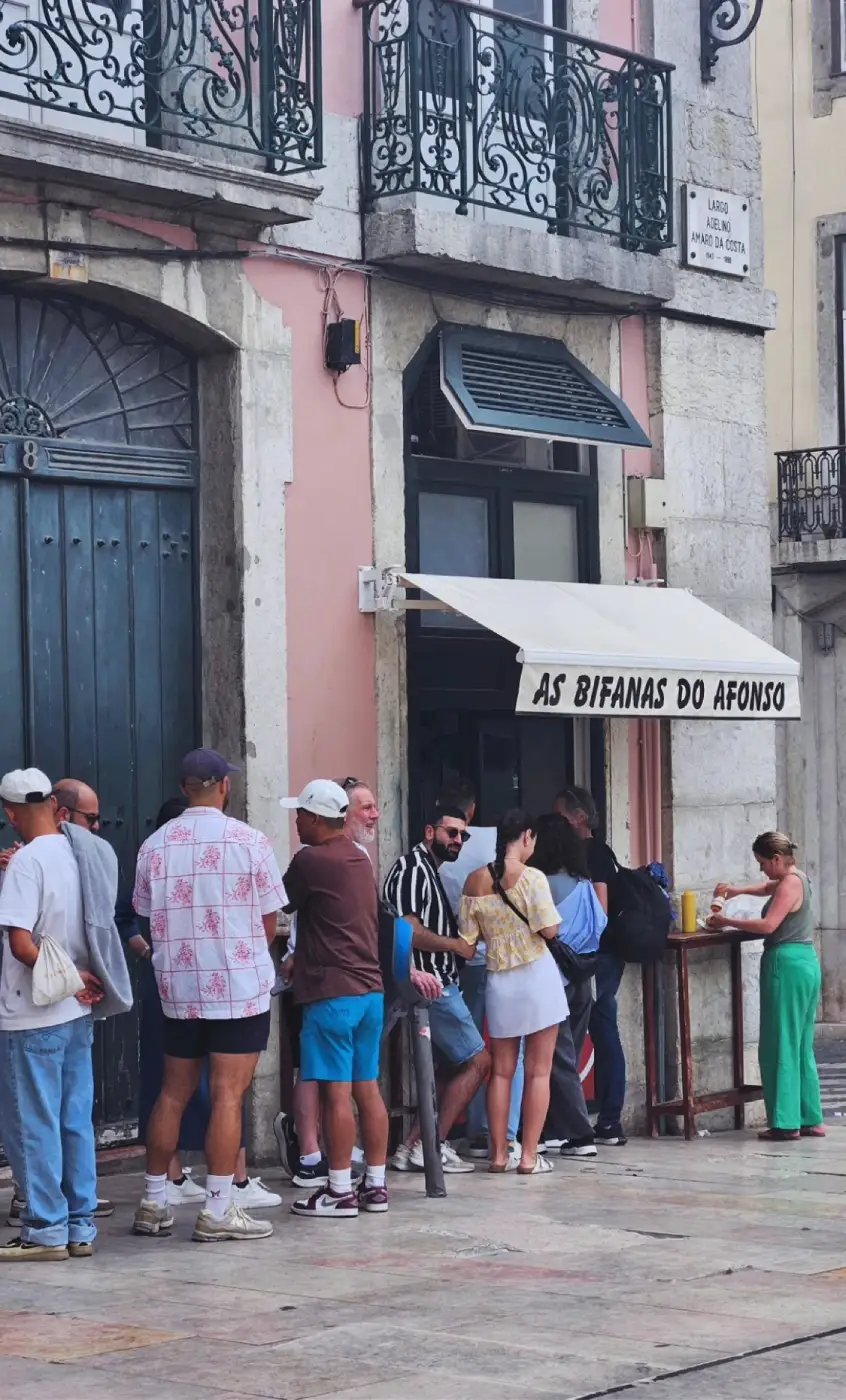
You can find international food all over Lisbon, but skipping Portuguese food would be a shame.
There are a few things that I think everyone should try at least once.
Bifana is a Portuguese pork sandwich in bread. It’s simple, cheap, and a great lunch.
Bacalhau à Brás is shredded salted cod with thin potatoes, onions, and eggs. Cod is a big part of Portuguese cuisine, so you’ll see it in a huge number of dishes.
And if you’re visiting during the warmer months, look out for grilled sardines.

A food tour can be worth booking at the beginning of your trip, especially if you don’t know much about Portuguese cooking.
It’s an easy way to discover dishes you might otherwise overlook.
11. Assuming the Bread and Olives Are Free
This is something worth knowing before sitting down at a restaurant in Portugal.
Your waiter might bring bread, olives, cheese, or pâté to the table before you’ve even ordered.
It looks like a complimentary appetizer, right?
Well, not necessarily.
In Portugal, this is called couvert, and restaurants can charge you for the items you choose to eat.
If you don’t want them, just politely decline or ask them to take them away.
There’s no need to feel awkward. It’s perfectly normal.
Personally, I think it’s a good idea to check what you’ve been given before you start eating, especially if you’re traveling on a budget.
12. Buying Pastéis de Nata From Just Anywhere


You can’t visit Lisbon and ignore pastéis de nata.
These Portuguese custard tarts have flaky pastry shells and creamy custard filling, often with a beautifully caramelized top.
They’re sold practically everywhere, but some bakeries make them much better than others.
A few well-known places worth trying are Manteigaria, Pastéis de Belém, and Castro.
If possible, get one while it’s still warm and sprinkle some cinnamon on top.
I think trying them from different bakeries is part of the fun. Everyone seems to have a favorite, and you’ll probably end up choosing your own.
13. Expecting Restaurants to Serve Food All Day
One mistake that can leave you hungry in Lisbon is assuming every restaurant stays open between lunch and dinner.
Many traditional Portuguese restaurants, known as tascas, have fairly specific serving hours.
Lunch is often served between 12 PM and 3 PM, while dinner may not begin until 7:30 PM or 8 PM.
Some places close their kitchens during the afternoon.
So if you’re wandering around at 4:30 PM hoping for a full meal, your options might be more limited.
The good news? Lisbon has plenty of cafés, bakeries, and casual places where you can grab a sandwich or pastry.
Just check restaurant hours if there’s somewhere specific you want to eat.
14. Booking a Hotel Without Checking the Location Properly


A hotel can look amazing online and still be completely wrong for your trip.
Lisbon is a good example of why location matters just as much as the room itself.
You might find a beautiful apartment in Alfama, only to discover that reaching it means dragging your suitcase up several steep streets.
And don’t assume every older building has an elevator.
Before booking, I recommend checking four things:
- Hills: Is the hotel on a steep street?
- Elevator: Will you need to carry luggage upstairs?
- Air conditioning: Especially important during summer.
- Noise: Are there late-night bars nearby?
Read recent reviews and search for words such as “stairs,” “noise,” “AC,” and “elevator.”
A lovely room won’t be much consolation if you’re climbing four flights of stairs every evening.
15. Waiting in the Longest Line for Tram 28

Riding Lisbon’s famous yellow Tram 28 is one of the experiences many travelers have on their list.
And yes, it’s worth doing.
But boarding at Martim Moniz, one of the route’s main terminal stops, can mean waiting in a very long line during busy periods.
Sometimes you’re standing there for ages before even getting on.
A better idea is to ride early in the morning, around 8 or 9 AM, before the biggest crowds arrive.
You can also try boarding at the opposite end of the route in Campo de Ourique.
It’s not a guarantee of an empty tram, but it may give you a more comfortable ride and a better chance of finding a window seat.
16. Taking the First Ride Offered at Lisbon Airport

After a flight, it’s tempting to get into the first available car and head straight to your hotel.
But don’t accept rides from random people approaching you inside the airport terminal.
Instead, use official taxis or a ride-hailing app.
Uber and Bolt both operate in Lisbon, so it’s worth checking prices on both before booking.
Bolt can sometimes be cheaper, although that depends on demand and availability.
For a more affordable option, there’s also a metro station at Lisbon Airport.

The Red Line connects the airport to Lisbon’s metro network, and you can change lines to reach other parts of the city.
If you’re traveling with light luggage, it’s an option worth considering.
17. Visiting Sintra Without Planning Ahead


Sintra is one of the most beautiful day trips you can take from Lisbon; it’s just a place you need to plan for.
The vibrant Pena Palace perches on a hill, surrounded by gardens and the like.

And here’s the key bit: Palace tickets have entry time slots.
Your ticket time is for entering the palace (not the park entrance).
According to the official visitor information, allow about 30 minutes to get from the park entrance to the palace.
With the potential for transport delays and crowds, it’s entirely possible that some people will miss their entry times.
Book in advance, allow plenty of travel time, and don’t try to cram too much into one day.
If the whole thing seems a bit stressful, then another option is a guided day trip from Lisbon.
You can check the entry rules on the official Pena Palace website.
18. Renting a Car Just to Explore Lisbon
Unless you’re planning a road trip around Portugal, I really don’t think you need a rental car in Lisbon.
The older neighborhoods have narrow roads, sharp corners, steep hills, and tram tracks running through streets that barely seem wide enough for regular traffic.
Then there’s the problem of finding parking.
For sightseeing around Lisbon, public transport is usually the easier choice.
You can use the metro, buses, and trams to get to most places, with Uber or Bolt available when needed.
Renting a car makes more sense if you’re leaving the city to explore destinations farther away, such as the Algarve.
But for a few days in central Lisbon? I’d save the money and skip the driving.
19. Staying in the Wrong Lisbon Neighborhood

Before choosing accommodation, think about what kind of trip you want.
For example, Bairro Alto is known for its nightlife. It’s a fun area for bars and evening entertainment, but it might not be ideal if you want a quieter night.
Baixa is a convenient option for first-time visitors. It’s central, relatively flat, and has good public transport connections.
Chiado is also well located, with shops, cafés, and plenty to explore nearby.
Then there’s Alfama, with its winding streets and beautiful old buildings.
I understand the appeal of staying there, but the steep hills and stairs can be tiring, especially with heavy luggage.
For a first visit, I’d personally lean toward Baixa or Chiado, depending on the hotel and budget.
20. Forgetting That You’re Visiting Portugal, Not Spain
Portugal and Spain might share a border, but they have different languages, traditions, and cultures.
One of the easiest mistakes visitors make is saying “gracias” instead of the Portuguese word for thank you.
A few simple phrases go a long way:
- Olá: Hello
- Por favor: Please
- Obrigado / Obrigada: Thank you (masculine/feminine forms)
And you don’t need to speak fluent Portuguese. A friendly greeting before asking whether someone speaks English is a good start.
It’s also worth paying attention to the atmosphere around you. Some cafés and restaurants are fairly quiet, so try not to speak much louder than everyone else.
When visiting churches, dress respectfully, remove your hat, and follow any posted rules.
One final thing: be sensitive when talking about how affordable Lisbon feels. Rising housing costs are a serious issue for many residents, especially in neighborhoods affected by short-term rentals. 🙂
Being a good traveler isn’t just about seeing the sights. It’s also about respecting the people who live there.
A Few Final Thoughts Before Visiting Lisbon

Lisbon is a fantastic city to explore, and I certainly wouldn’t want any of these mistakes to put you off going.
You wouldn’t need to plan every hour of your trip, obviously.
Just get the key bits in order: comfortable shoes, a good hotel location, the right transport tickets, and any bookings you need to make for the attractions.
And please do leave yourself some time to just wander.
Some of the best moments in Lisbon are wandering down a random street, having a coffee, or stumbling upon a viewpoint you didn’t plan to visit.
A good trip to Lisbon doesn’t have to be complicated. A bit of advance planning will go a long way to ensuring you’re not spending your time troubleshooting and are instead actually enjoying the city.