

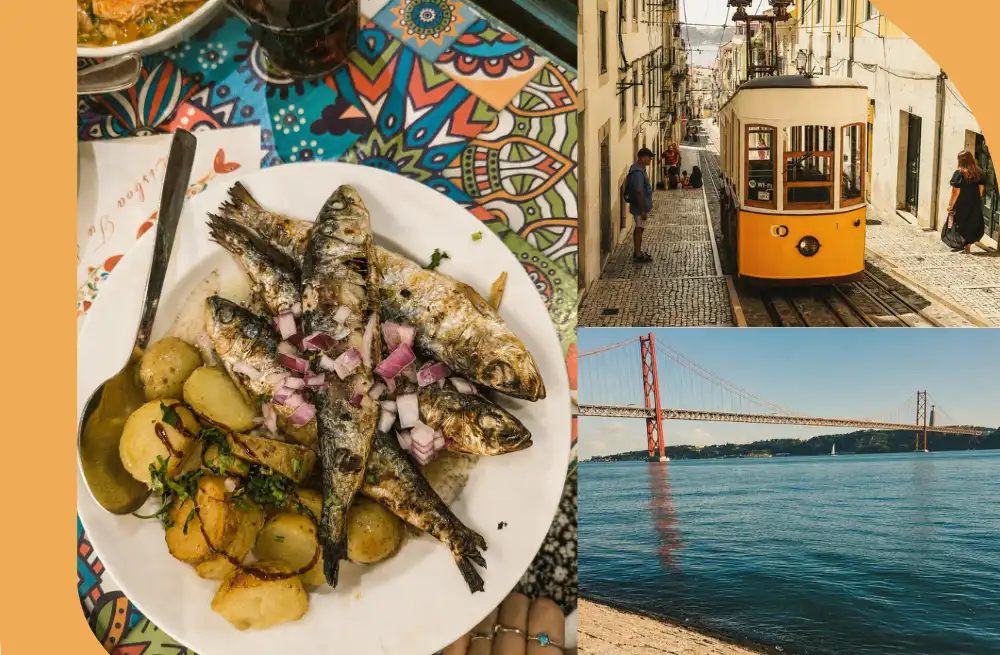
Lisbon had been on my list for a long time, and after finally spending several days there, I understand the hype. The city has a bit of everything: viewpoints on every hill, a castle you can watch the sunset from, some of the best pastries in Europe, and day trips that feel like entirely different countries.
I visited with my mom, and we covered a lot: the historic center, Belém, a full day in Sintra, and a longer day trip to Fátima, Nazaré, and Óbidos. We also made some mistakes along the way, which I’ll share so you don’t repeat them.
This is a long guide, but I’ve structured it so you can jump to what you need. I’ve included current prices, what’s closed for renovation right now (more than you’d expect), and the tricks that saved us real money.
Short on Time? Here Are My Quick Tips for Visiting Lisbon 🇵🇹
Getting there: We flew direct from Germany, which takes around 3 hours. TAP and Lufthansa fly from Frankfurt and Munich, and Ryanair and easyJet cover Berlin, Hamburg, and others. Book a few weeks ahead and you can get returns for under €100.
Getting around: Buy a Viva Viagem card at any metro or train station and validate it every single time you board. Inspectors check, and an unvalidated card means a fine, even if it has credit on it.
Lisboa Card: Free entry to 50+ attractions plus unlimited public transport, in 24/48/72-hour versions. We did the math for our itinerary and it didn’t pay off for us, but if you’re a museum person it likely will. More on this below.
Booking ahead: Buy tickets online in advance for São Jorge Castle, Jerónimos Monastery, and everything in Sintra. These attractions have timed entry and sell out. Showing up without a ticket means long queues or missing out entirely.
Mondays: Many attractions and restaurants close on Mondays. If your trip includes one, double-check opening days before planning anything around it.
Money: Carry both cash and a card. The famous ginjinha stand is cash only. Time Out Market is card only. You need both.
Pickpockets: Lisbon is safe, but pickpocketing on the crowded Tram 28 and at busy viewpoints is a real thing. Keep your bag zipped and in front of you.
Getting to Lisbon (and What to Expect at the Airport)
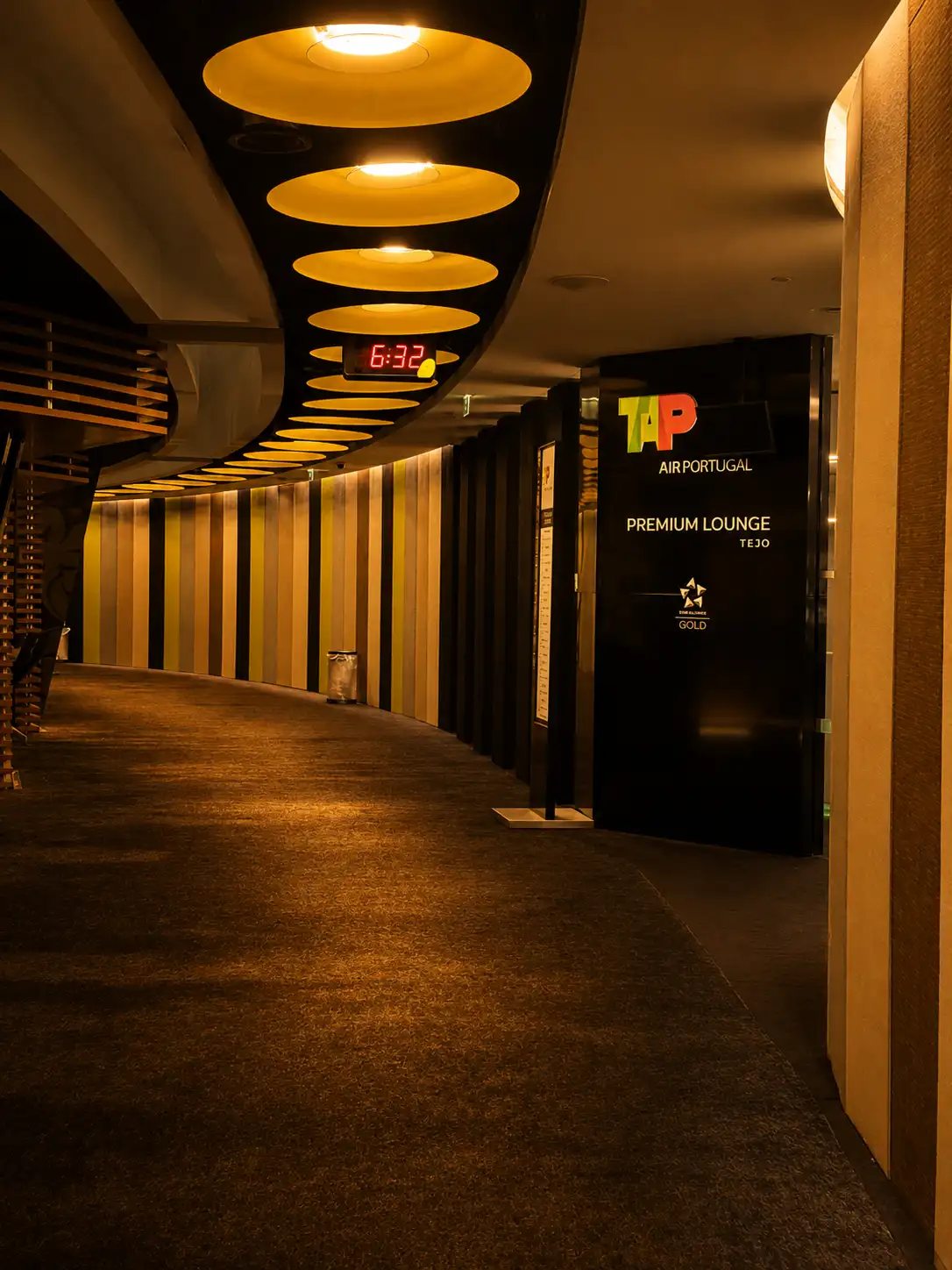
Since we’re based in Germany, getting to Lisbon was straightforward: a direct flight of about 3 hours. Lisbon airport (Humberto Delgado, LIS) is one of the most conveniently located airports of any European capital. It’s inside the city, around 20 minutes from the center by metro.
If you’re traveling within Schengen like we were, there’s no passport control at all. You land and walk out.
If you’re flying in from outside the EU, a few things to know:
- The non-EU immigration queue at Lisbon airport is slow. Plan for 1 to 2 hours. The check itself is easy: passport, maybe a question about your accommodation and how long you’re staying.
- ETIAS, the EU’s new travel authorization for visa-exempt nationalities (US, UK, Canada, Australia, and around 60 others), is not required yet as of mid-2026. It’s expected to launch late this year: €20, an online form, valid for 3 years. Only use the official portal (travel-europe.europa.eu/etias). Third-party sites charge fake service fees for it.
- Your passport needs at least 3 months of validity beyond your departure date from Schengen.
For the flight home: the queues at Lisbon airport are genuinely bad. The standard advice is 3 hours before an international flight. For Lisbon specifically, I’d say 4. There’s a queue for security, then another for passport control, and both move slowly at peak times.
Where We Stayed (and Where You Should)
We stayed outside the center in Oeiras, at a hotel built inside a 15th-century palace, and it was one of the best decisions of the trip.
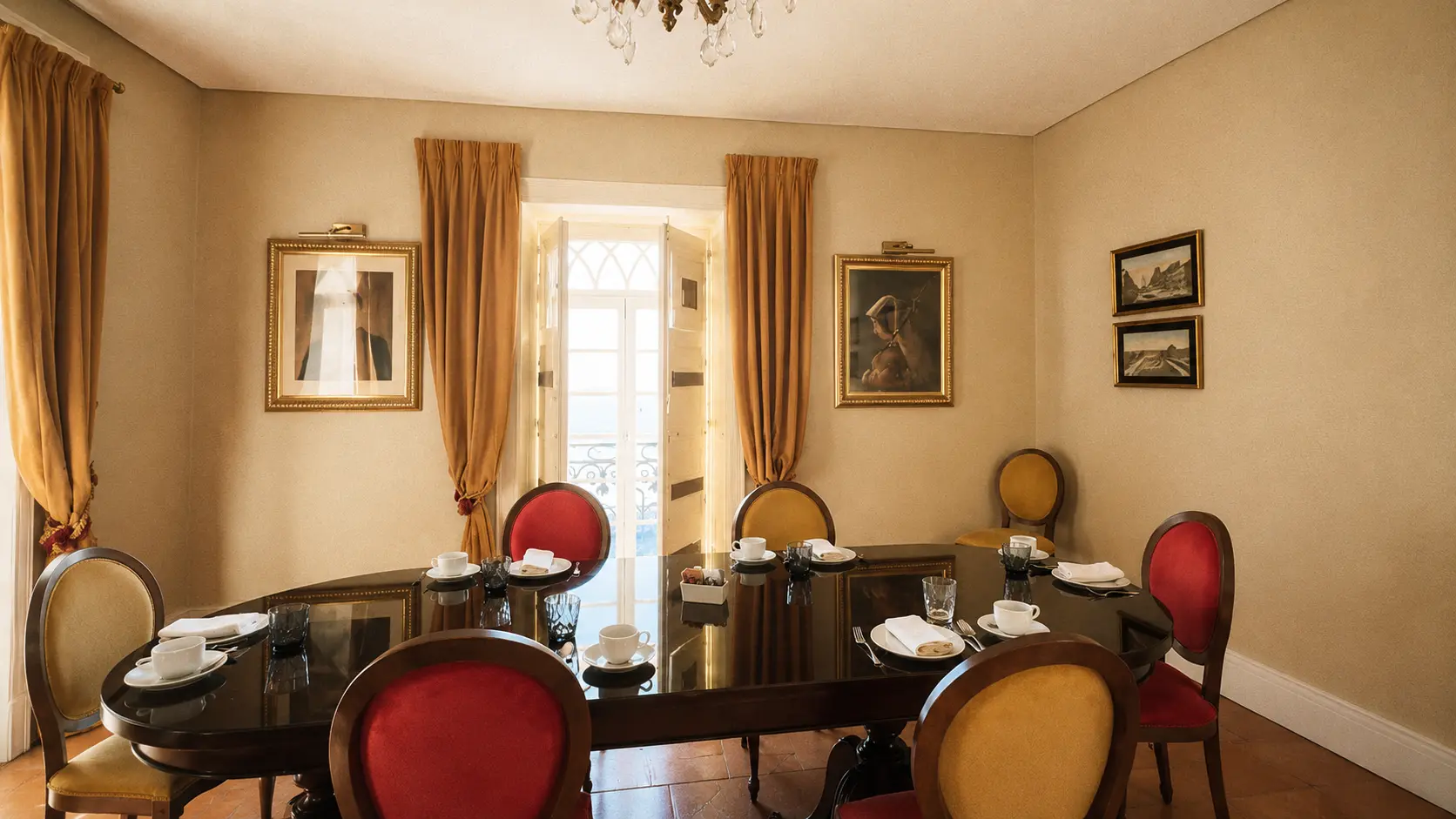
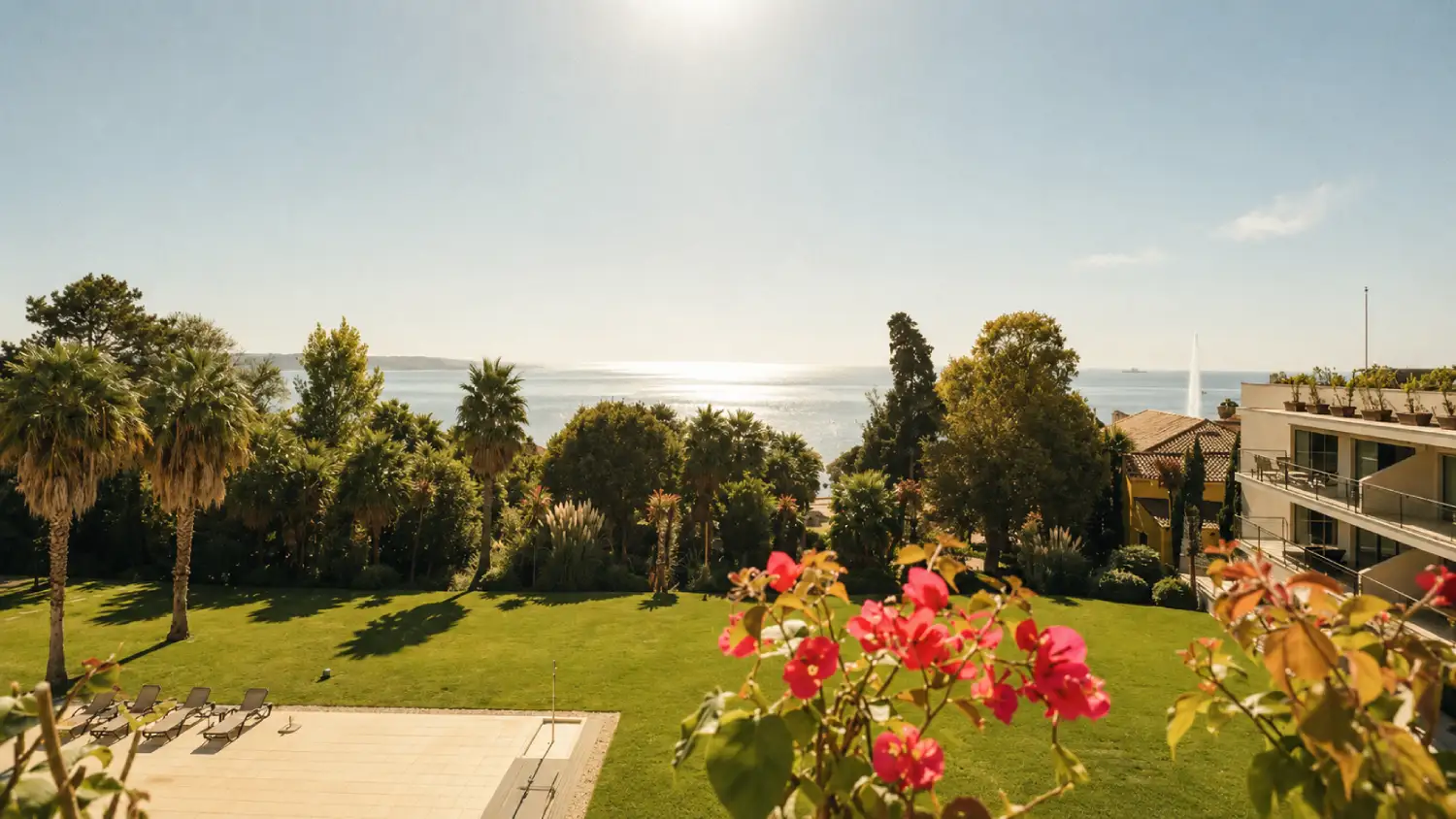
Facing the sea, birds in the morning, a beach nearby, and a train station right next door. Central Lisbon was 20 minutes away by train, which honestly cost us nothing in convenience.
That said, the right neighborhood depends on your travel style:
- Baixa and Chiado: Stay here if you want to walk out the door into the middle of everything. Best location, most noise, most tourist-priced restaurants around you.
- Alfama and Graça: The most atmospheric option. Narrow medieval lanes, fado at night. The tradeoff is steep cobbled streets that are genuinely hard work with luggage.
- Oeiras / the coast: What we did. Quieter, cheaper for what you get, sea views, beach access, and a 20-minute train into town. Ideal if you want to actually rest at the end of each day.
Our hotel was poetry-themed, with each room dedicated to a Portuguese-language poet and verses along the corridors. It also hosted a poetry dinner on Friday nights (€35 per person including food and drinks, with an actor performing poems between courses).
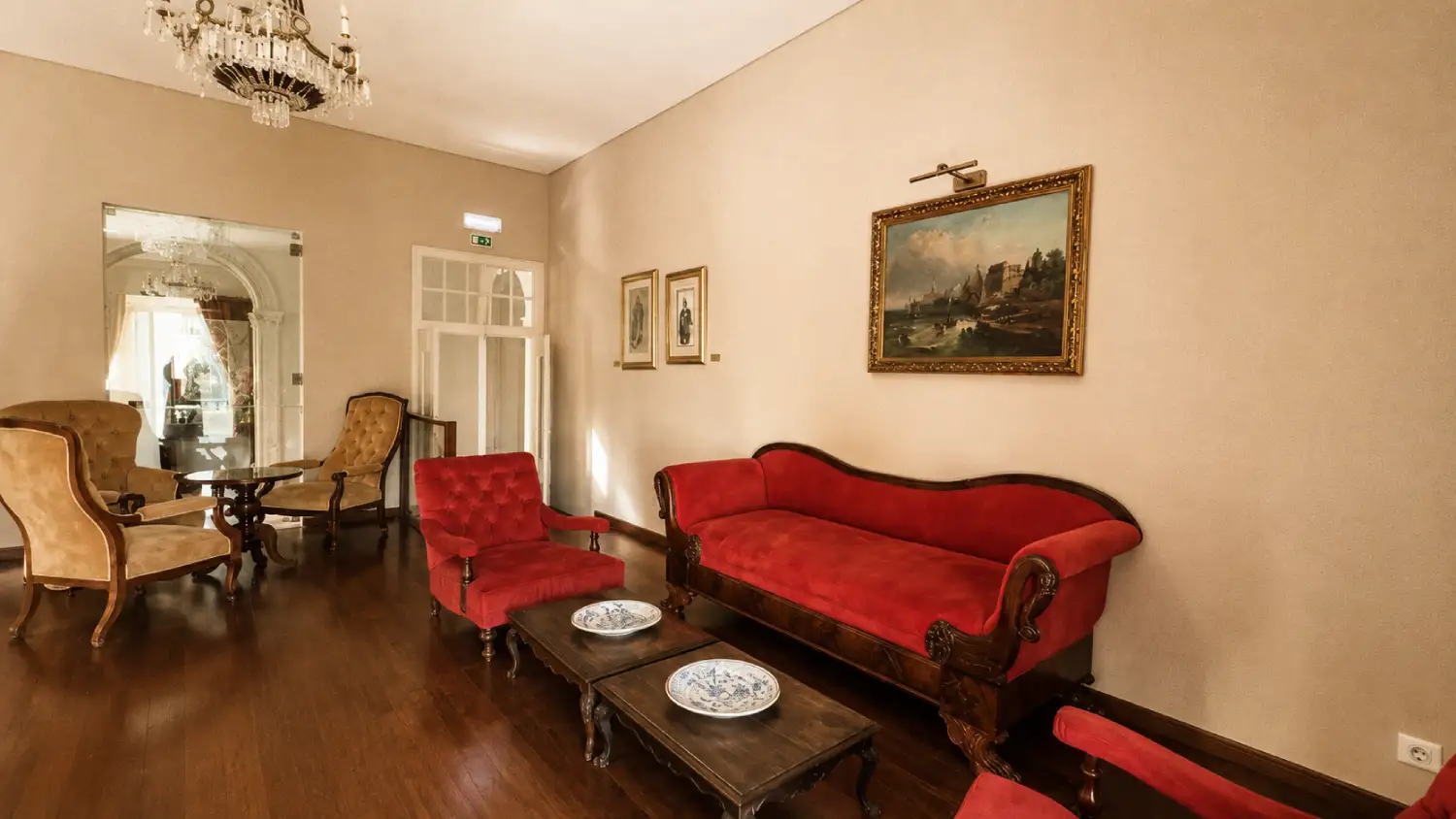
I mention this not to sell you that specific hotel but because Lisbon’s outskirts are full of converted palaces and manor houses at prices that would be impossible in central Paris or Rome. It’s worth searching beyond the center.
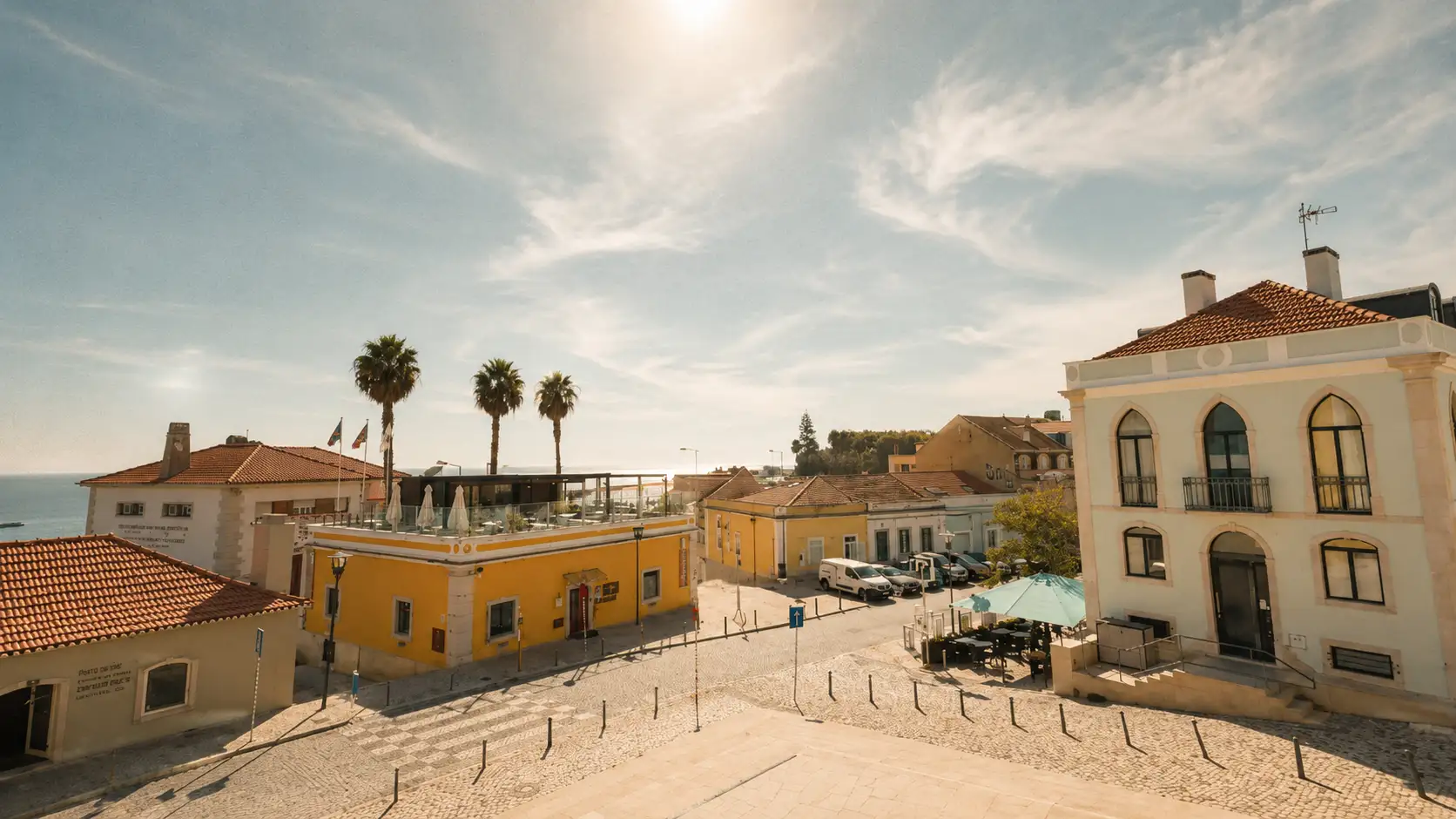
Getting Around Lisbon
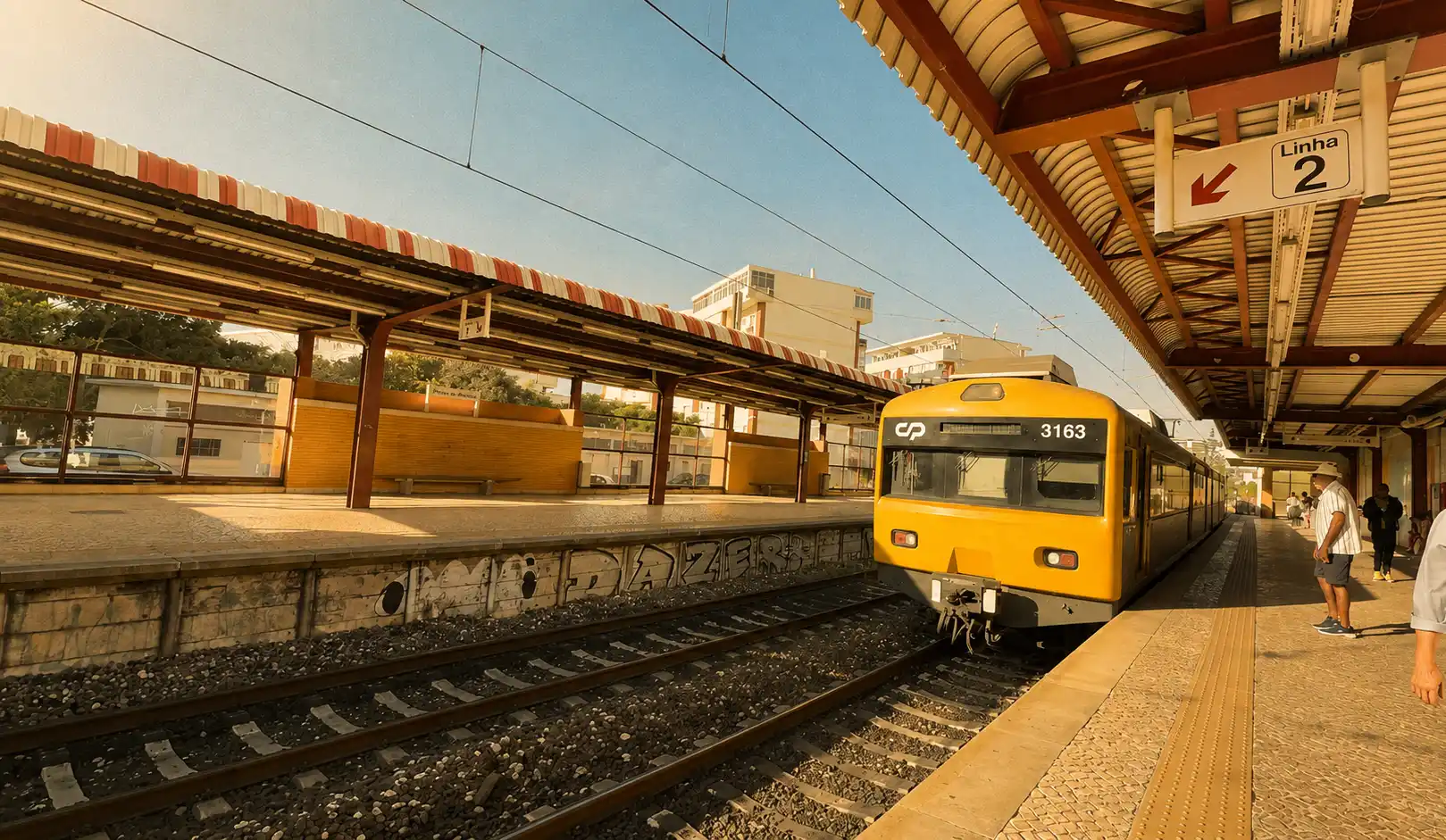
Public transport here is cheap and covers everything you’ll want to see. A few things worth knowing:
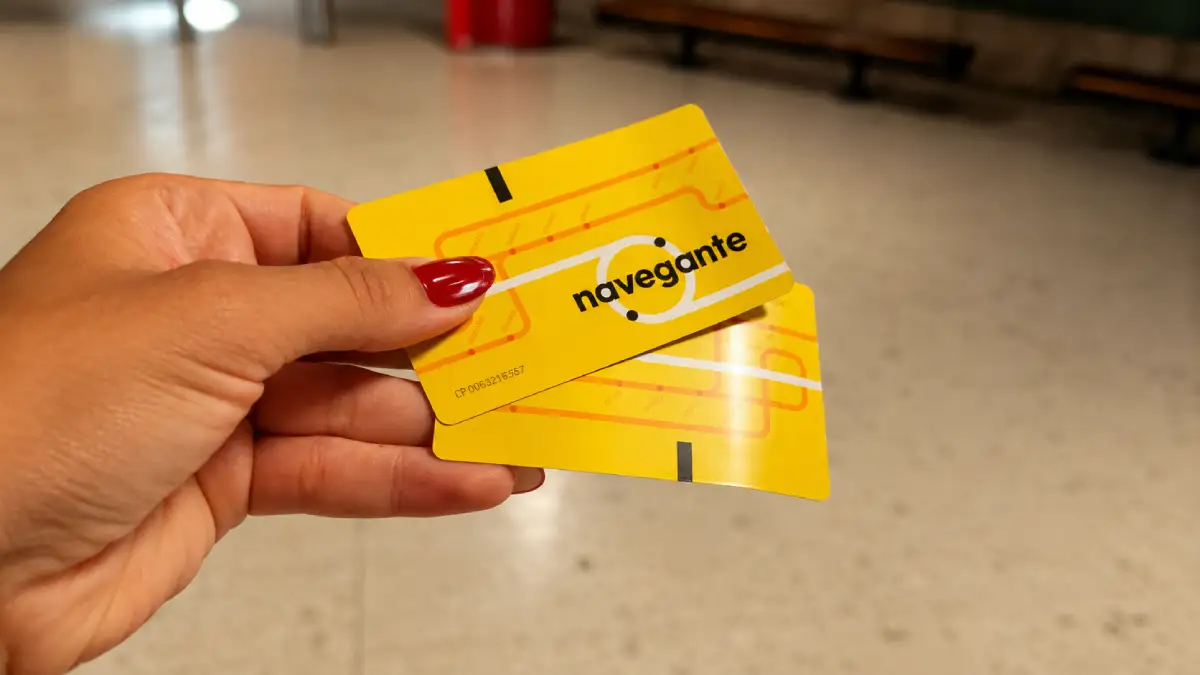
- The Viva Viagem card (the yellow one, also called Navegante) is sold at machines in every metro and train station. It’s reloadable, so keep it for your whole trip. Validate it at the reader every time. I’m repeating this because the fine for not validating is real and inspectors do board trains to check.
- The trains along the coast (to Oeiras, Belém, Cascais) leave from Cais do Sodré station and are the easiest way to cover distance in this city.
- Tram 28 is the famous historic tram, and it deserves its own section later in this guide, both for how good it is and for the pickpocket problem.
- Google Maps works well for public transport routing here. Just make sure you have data. We used a travel eSIM with unlimited data, and I’d recommend sorting that (or an EU roaming plan) before arrival rather than hunting for SIM cards at the airport.
Is the Lisboa Card Worth It?
The Lisboa Card gives you unlimited public transport plus free entry to a long list of attractions, including Jerónimos Monastery and São Jorge Castle. It comes in 24-hour (€27), 48-hour (€44), and 72-hour (€54) versions, roughly, and prices creep up each year, so check current ones.
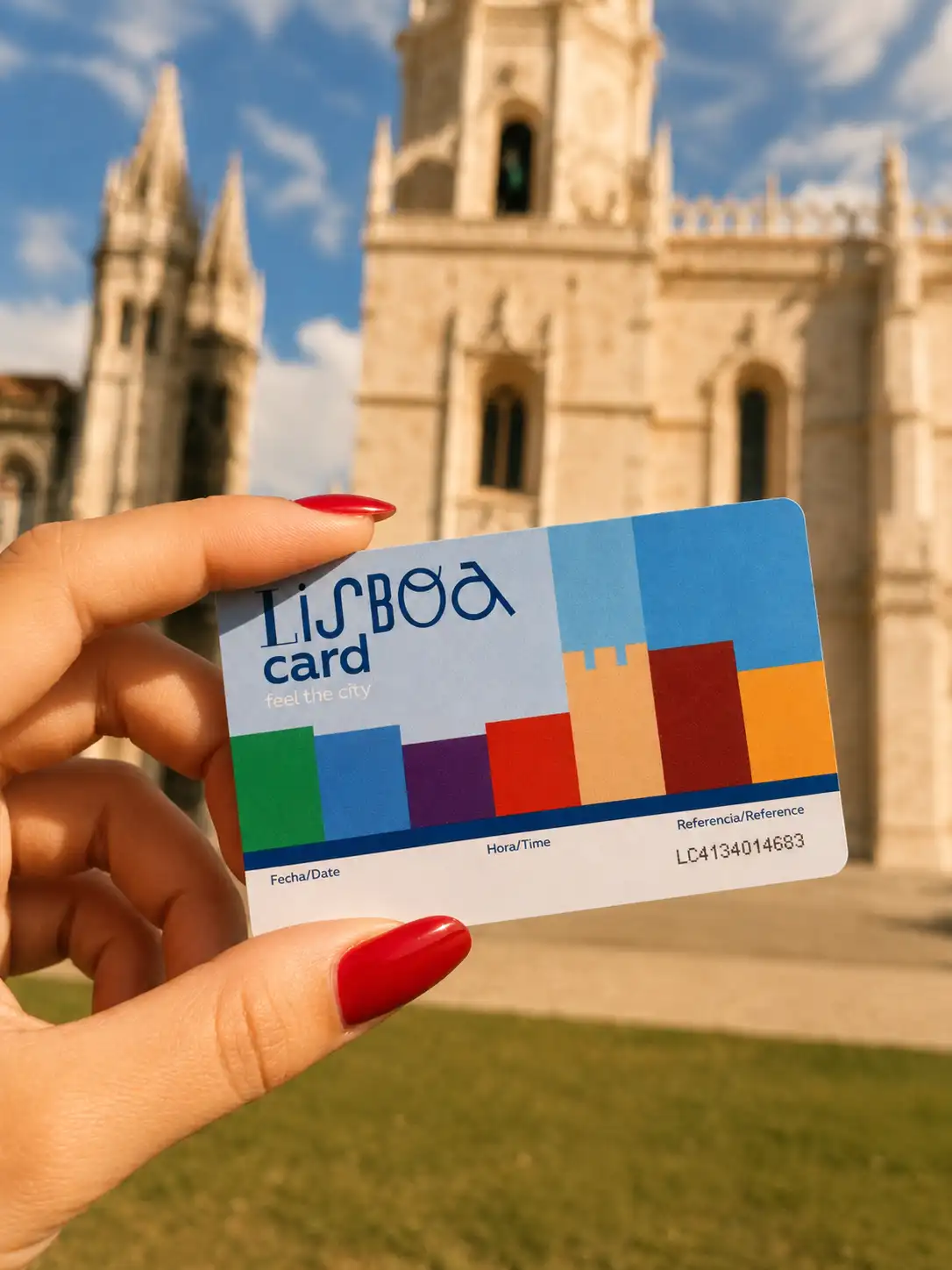
Here’s the honest answer: we did the math for our specific plan and it didn’t pay off, because we spent big chunks of our trip in Sintra and on a day trip out of the city, where the card doesn’t help much.
If your itinerary is Lisbon-heavy with multiple paid museums and monuments per day, it pays for itself easily. Add up your planned entries before buying. Don’t assume it’s automatically a good deal just because it exists.
Alfama: Start Here
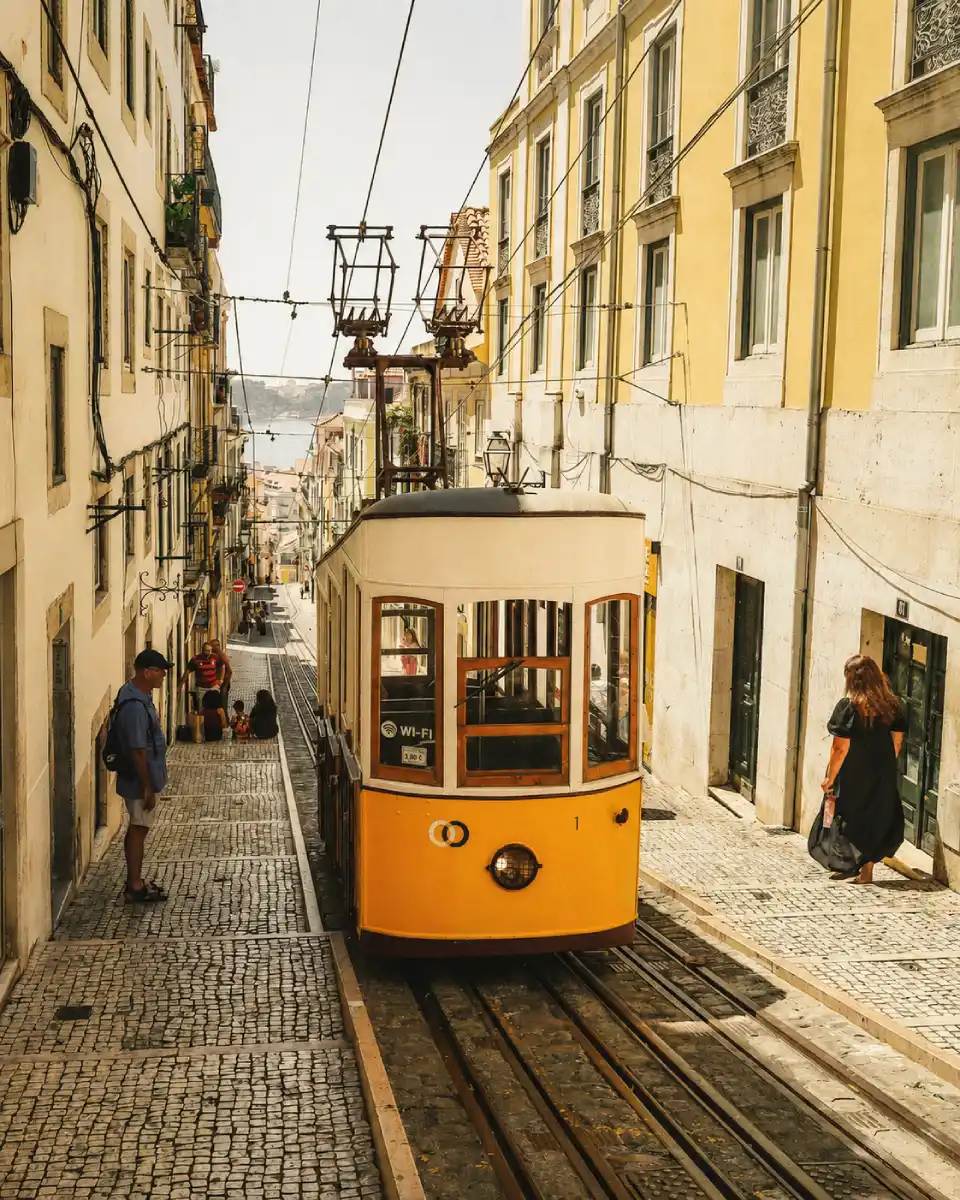
Alfama is Lisbon’s oldest neighborhood, and it survived the 1755 earthquake mostly intact. That means the street layout is still medieval: narrow lanes, steep staircases, no straight lines, laundry hanging between buildings. There’s no efficient route through Alfama and trying to plan one misses the point. Pick a direction that goes uphill and wander.
Two practical things for this neighborhood specifically:
- Bring cash. The smallest traditional restaurants here often don’t take cards.
- Prepare your calves. I’m not joking. This city is one long hill, and Alfama is the steepest part of it. Wear proper shoes.
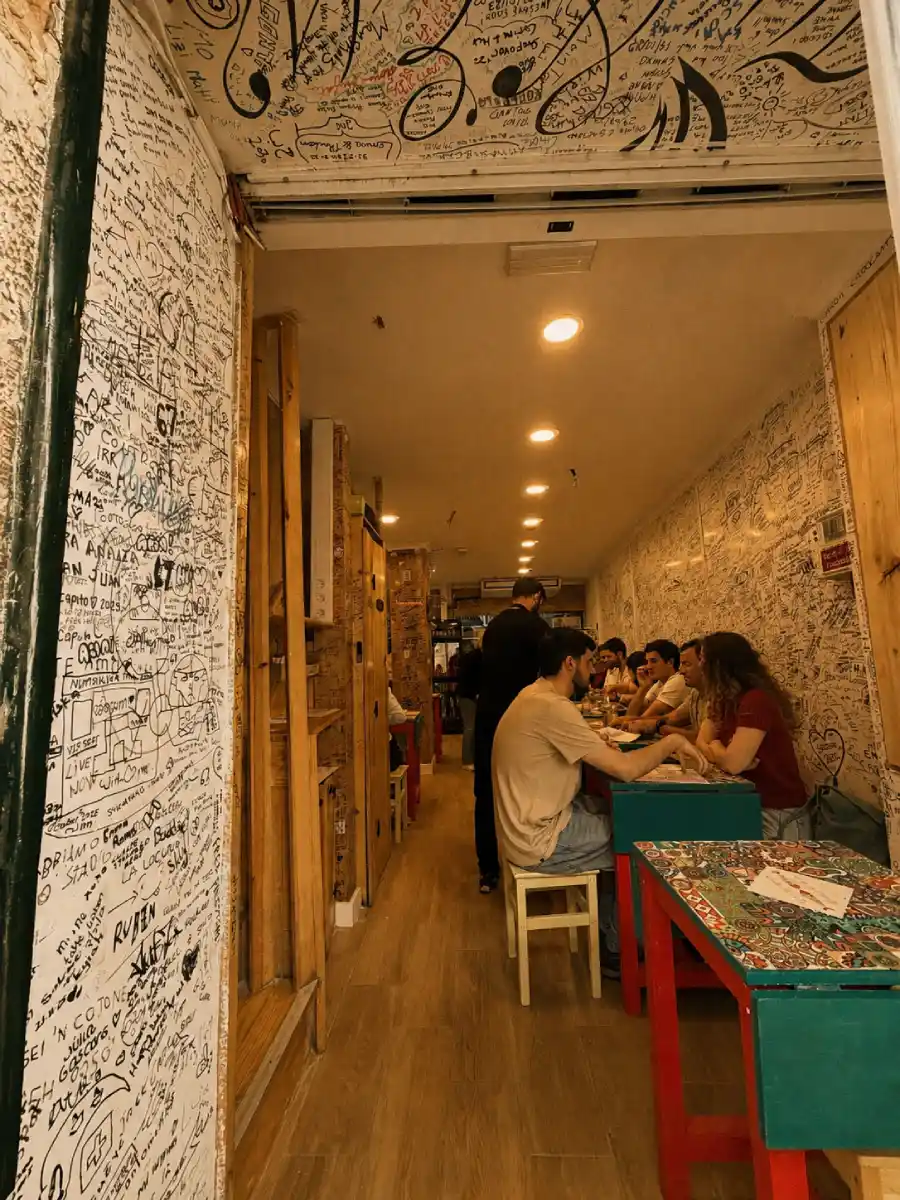
We had lunch at a tiny traditional place called Lisboa Tu e Eu, near the cathedral, run by a woman who cooks authentic Portuguese food at fair prices. The walls are covered in notes left by travelers from all over the world.
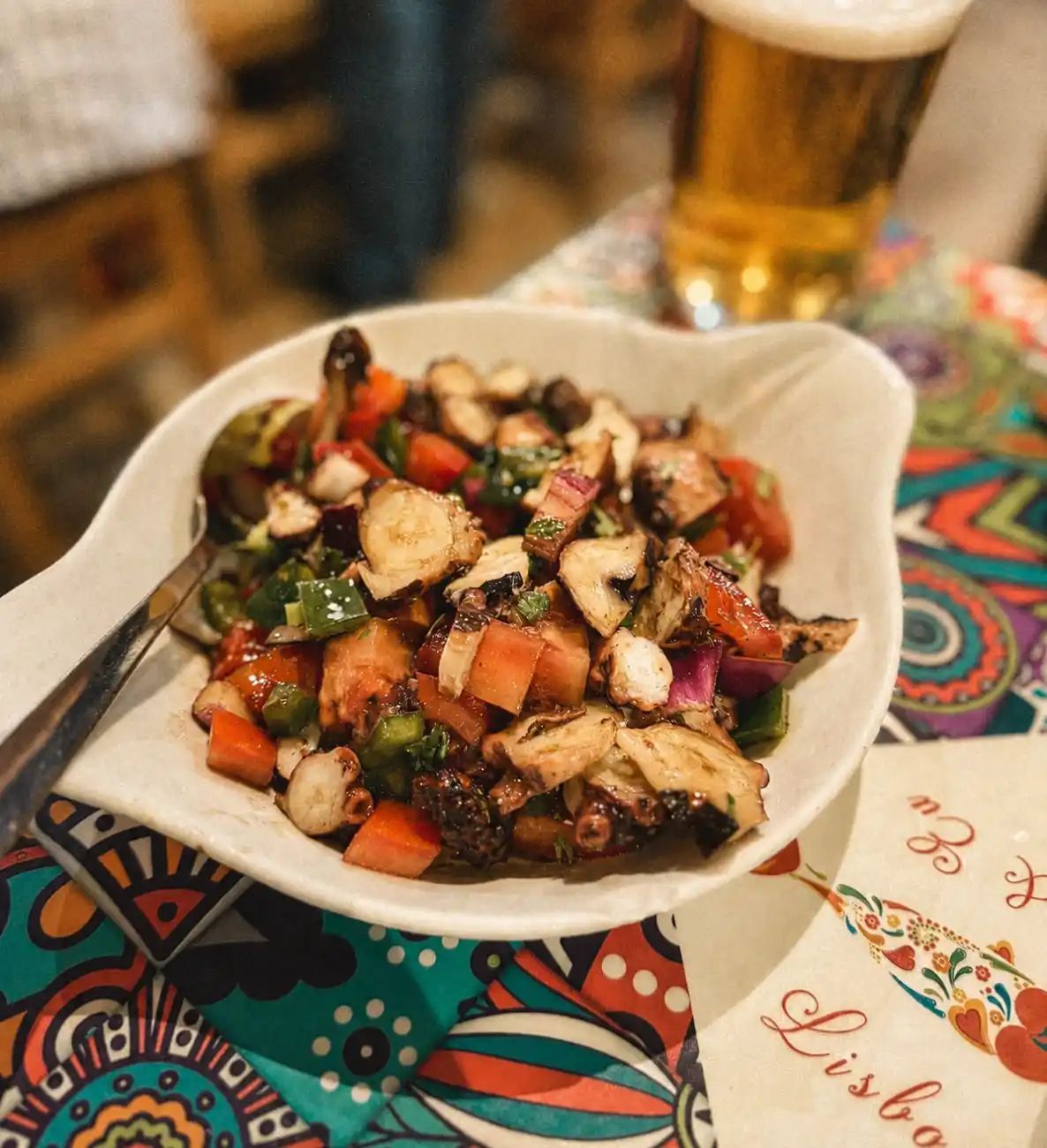
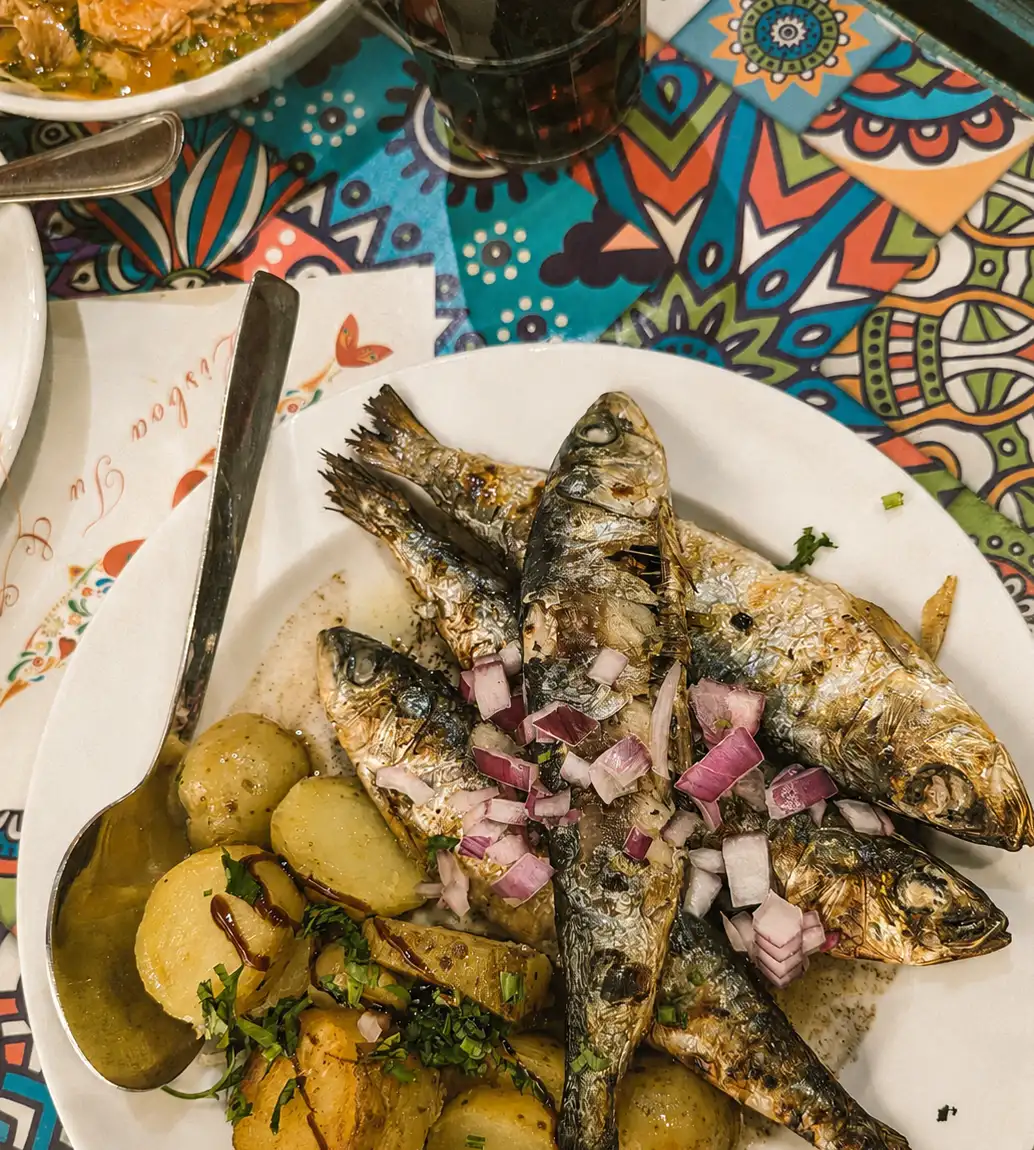
We ordered sardines and bacalhau (codfish), and it was exactly the kind of home-style cooking you hope to find on a first day. Places like this are why you carry cash.
Sé de Lisboa (The Cathedral)
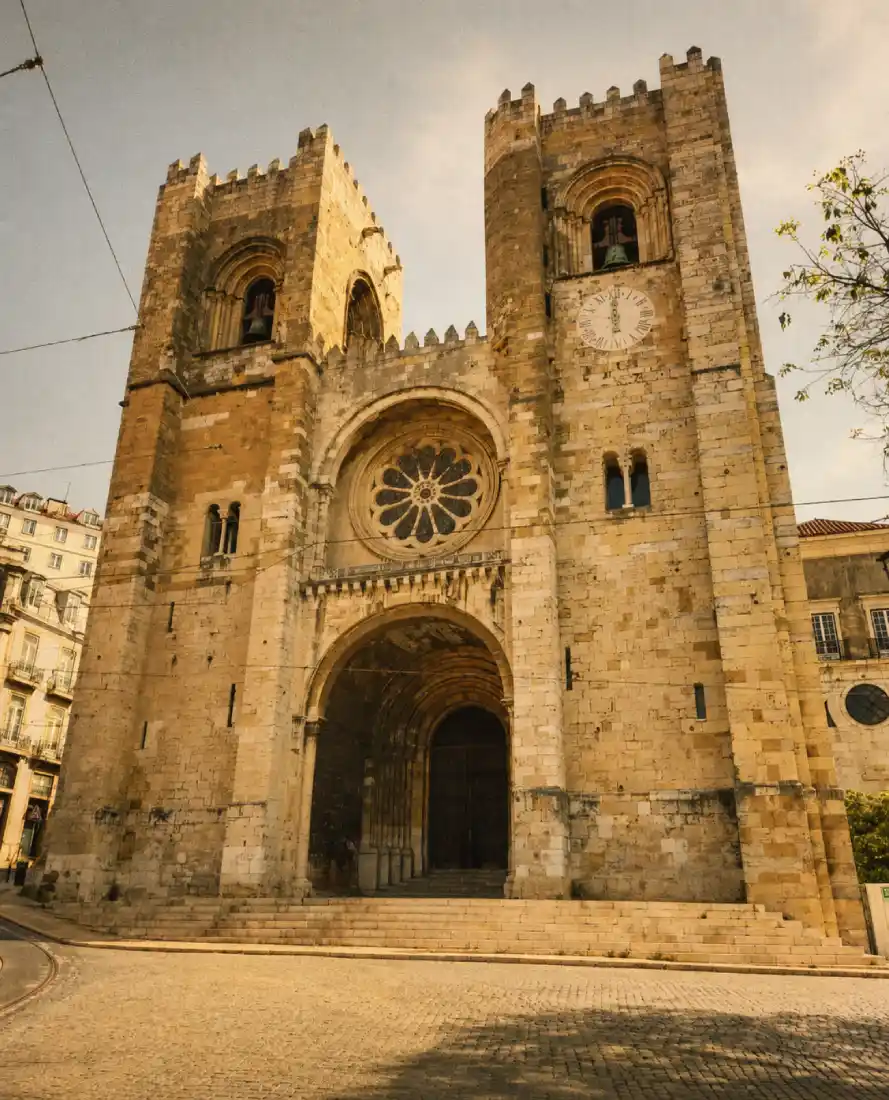
The Sé is Lisbon’s first church and it sits at the lower edge of Alfama, so it’s the natural starting point for the climb. It looks more like a fortress than a cathedral, with two heavy bell towers, because for parts of its history it needed to be one.
Useful things to know:
- Entering the church itself is free.
- The museum and the towers are paid extras. My honest take: skippable. The best part of the Sé is the outside, with Tram 28 rattling past close enough to touch.
How to Get There: It’s a short walk uphill from Baixa, or Tram 28 stops directly in front of it.
The Free Viewpoints (Miradouros)
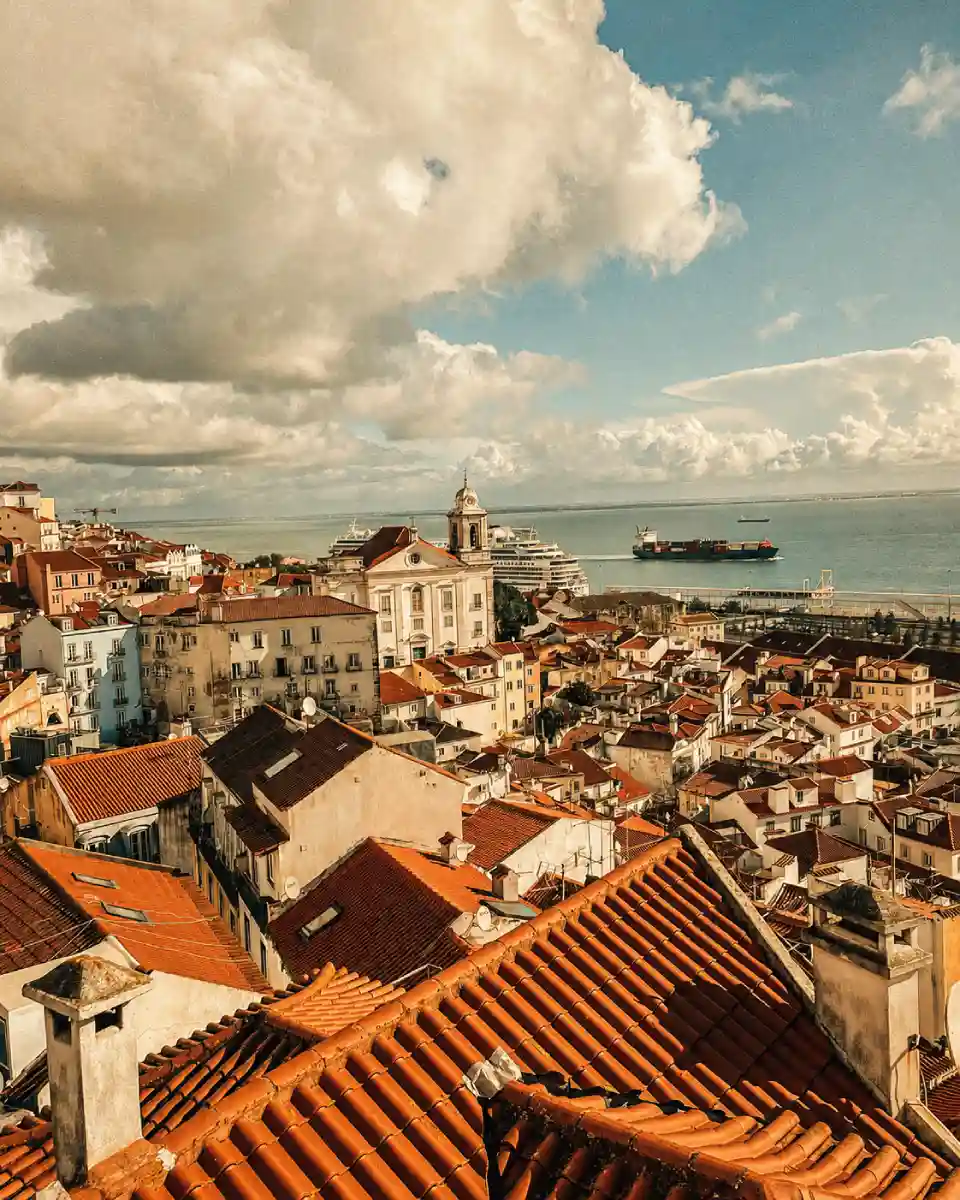
Some of the best views in Lisbon cost nothing. The city is full of miradouros, public viewpoints where locals watch the sunset with a beer from the kiosk. In Alfama, two sit almost next to each other and both are free:
- Miradouro de Santa Luzia: small, tiled, covered in bougainvillea, looking straight over the rooftops to the river. One of the most photographed spots in the city, and it earns it.
- Miradouro das Portas do Sol: two minutes further along. Bigger, with café seating, same view stretched wider.
Both fill up before sunset. Get there 20 to 30 minutes early if you want a spot on the wall.
Castelo de São Jorge
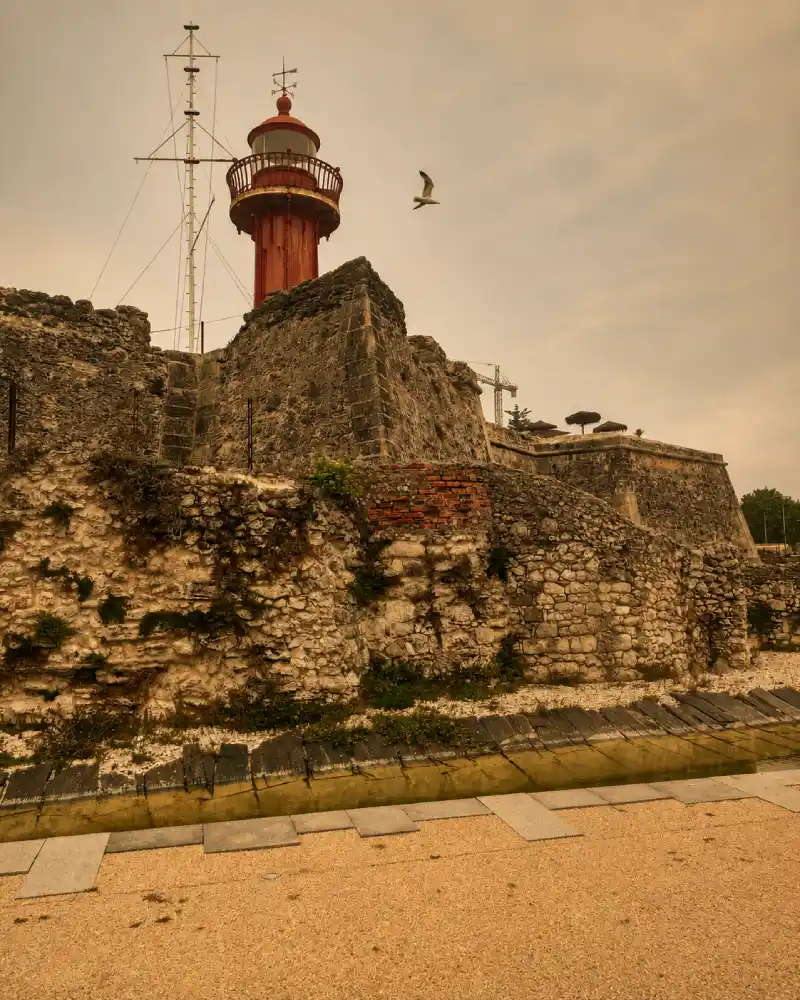
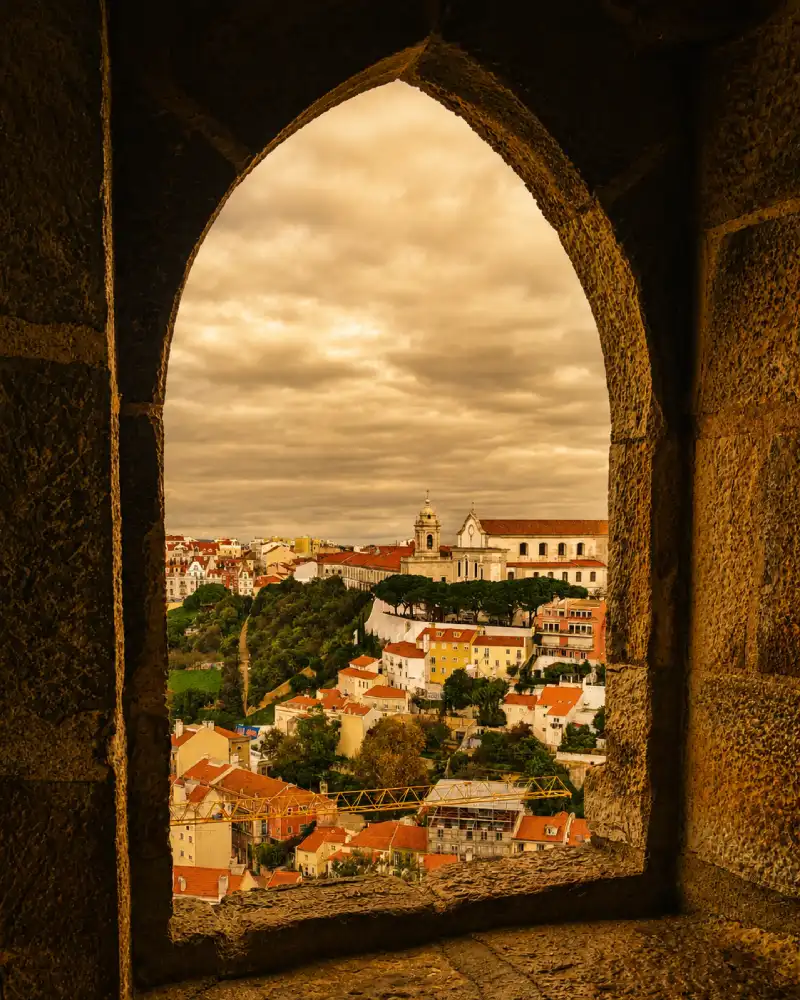
Keep climbing past the viewpoints and you reach the top of the hill, where São Jorge Castle sits. The fortress was built by the Moors in the 10th century, later housed Portuguese kings, and survived two major earthquakes. Walking on walls that are a thousand years old doesn’t get old.
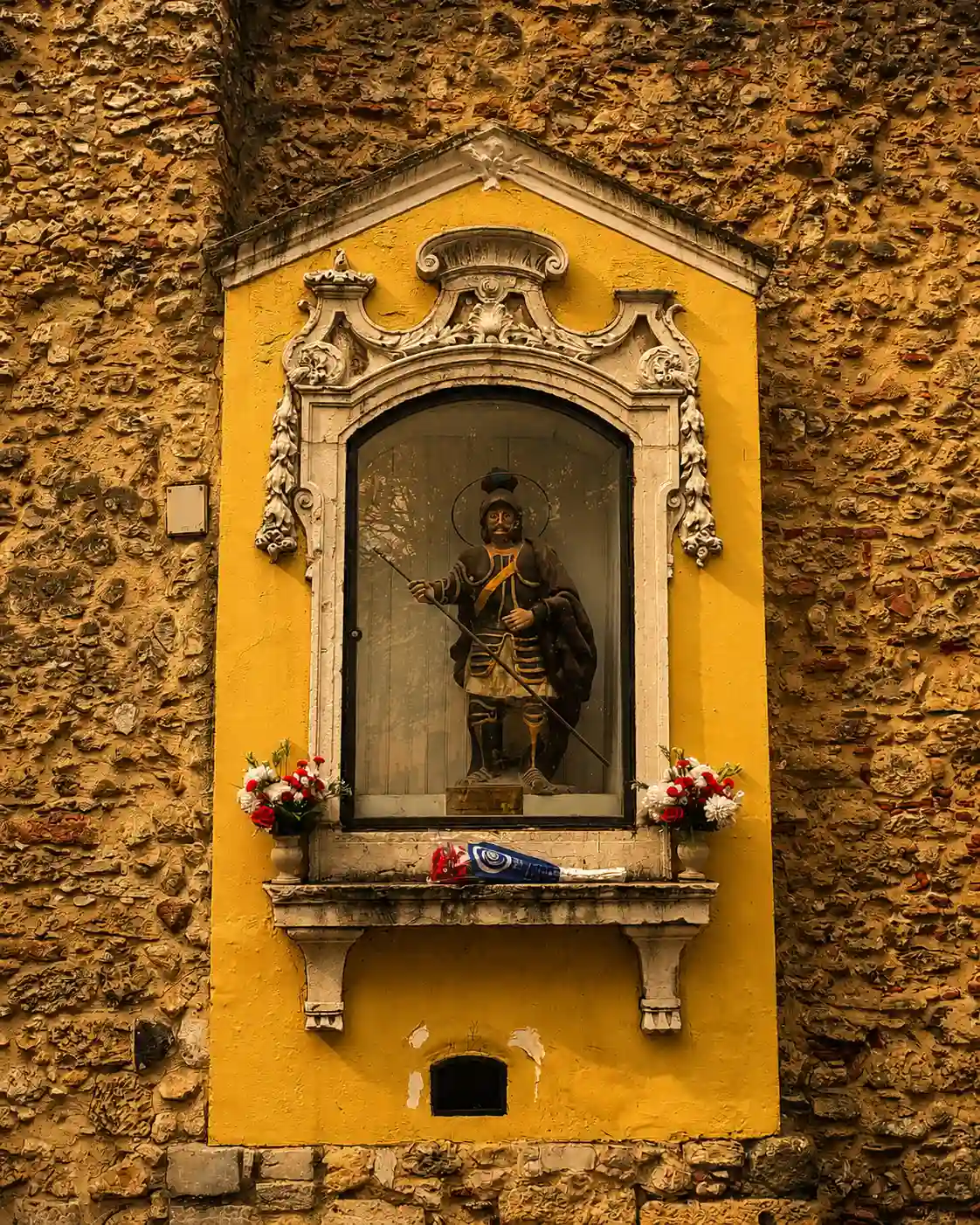
We paid €15 per adult and it was worth it. Inside you get the ramparts, several climbable towers, a small museum, and an archaeological site.
Useful things to know:
- Buy your ticket online in advance. The only authorized online seller is BOL (BilheteiraOnline), linked from the castle’s official site. With a ticket you skip the line entirely.
- Prices run €15 to €17 for adults depending on category. Kids 12 and under are free. The Lisboa Card includes entry.
- Plan 1.5 to 2 hours for the full visit.
- Come for sunset. This is the single best tip I can give you for the castle. The view from the walls with the whole city and the river turning gold is one of the highlights of the entire trip.
How to Get There: Walk up from Baixa (20 to 25 minutes, all uphill) or take Tram 28 to Miradouro Santa Luzia and walk the rest.
Praça do Comércio and Rua Augusta
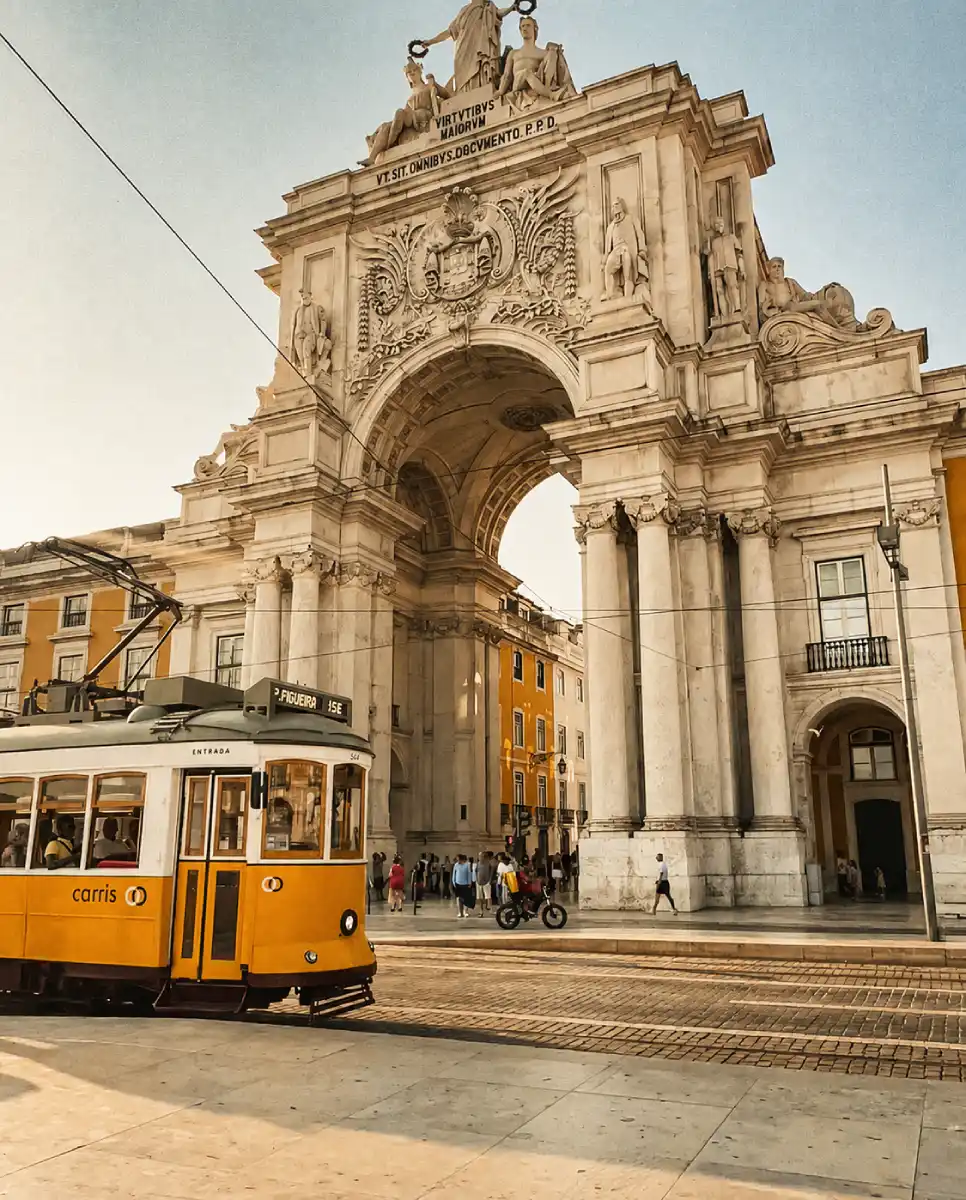
Down at the bottom of the hill, on the riverbank, sits Praça do Comércio, one of the largest squares in Portugal. It’s huge, yellow, and opens directly onto the Tagus, which makes it feel more like a harbor than a square. Facing it is the Arco da Rua Augusta, the arch that leads into the city’s most famous pedestrian street.
Rua Augusta is touristy, but a few stops on it are genuinely worth your time:
- Casa Portuguesa do Pastel de Bacalhau. They make traditional codfish cakes here from an original 1904 recipe, and you can watch them being made. The recipe: cod, parsley, eggs, onion, garlic, and potato. No flour, fried in olive oil. You can order it stuffed with Serra da Estrela cheese and pair it with a glass of Port, and you keep the glass as a souvenir. It’s not a cheap snack, but it’s worth every bite.
- The sardine shops. Half souvenir store, half photo set. The gimmick that actually works: tins labeled by birth year, each printed with that year’s events. Cheap, flat, doesn’t break in luggage. One of the better gifts you can bring home from Lisbon.
Rossio and Around
Rua Augusta feeds into Praça do Rossio, with its famous wave-pattern cobblestones. Fun fact: this pattern inspired the Copacabana boardwalk design in Rio de Janeiro. Once you see it, the resemblance is obvious.
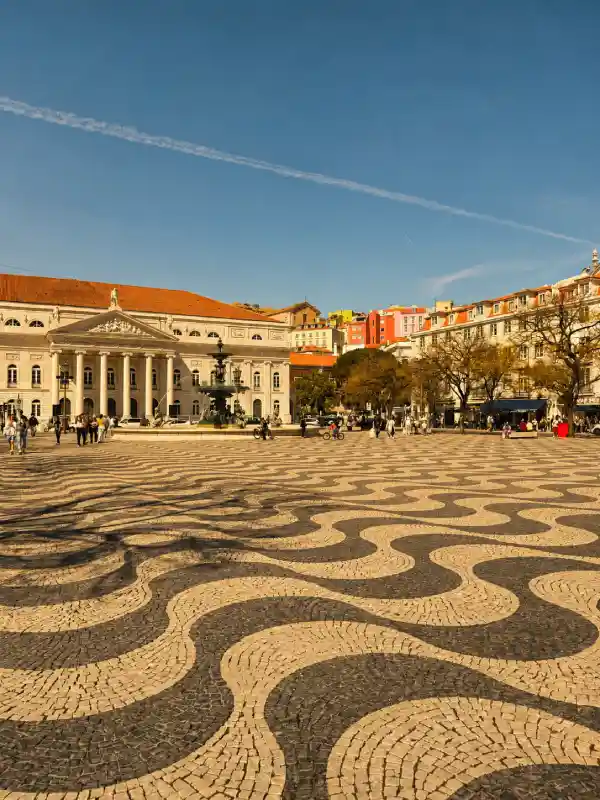
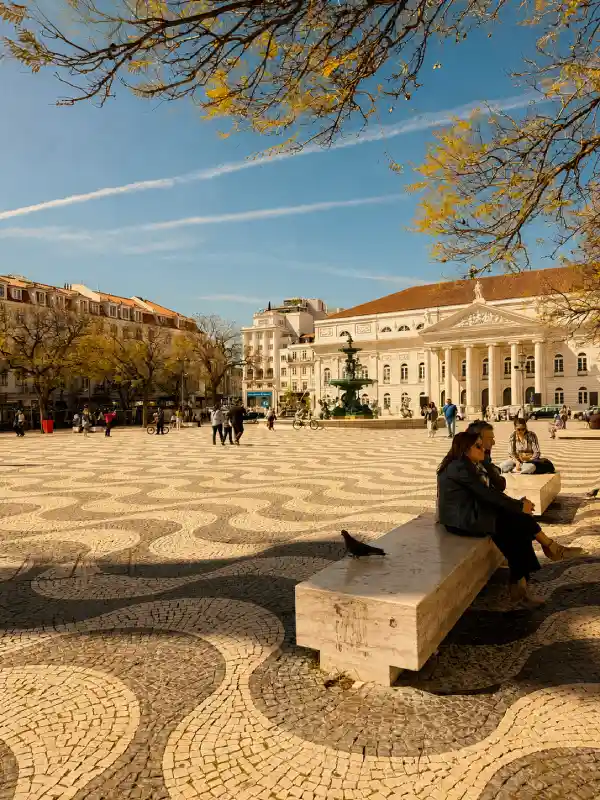
Within a couple minutes’ walk of Rossio:
- Igreja de São Domingos. Free entry and worth five minutes. The interior still carries the scars of a major fire, which gives it an atmosphere no other church in the city has.
- A Ginjinha. Right next to the church is the famous hole-in-the-wall stand serving ginjinha, Lisbon’s traditional cherry liqueur. Order it “com” (with the cherry) or “sem” (without). Fair warning: the cherry itself is intensely sour. Cash only.
The Pastel de Nata Taste Test
Two of the most famous pastel de nata makers in Lisbon sit near this stretch, and you should turn it into a taste test like we did:
- Manteigaria: extremely buttery layered pastry, rich cream.
- Fábrica da Nata: same fight, slightly different balance.
Both are excellent. My personal winner was Manteigaria, mostly for the pastry, but they’re minutes apart and cost about €1.50 each, so try both and decide for yourself. Also worth trying: Pastelaria Santo António near the castle, which has been voted best pastel de nata in the city before. Crunchy shell, soft cream. And no, none of these are the “original”, that’s Pastéis de Belém, which gets its own section in Phase 3.
Up to Carmo and Chiado
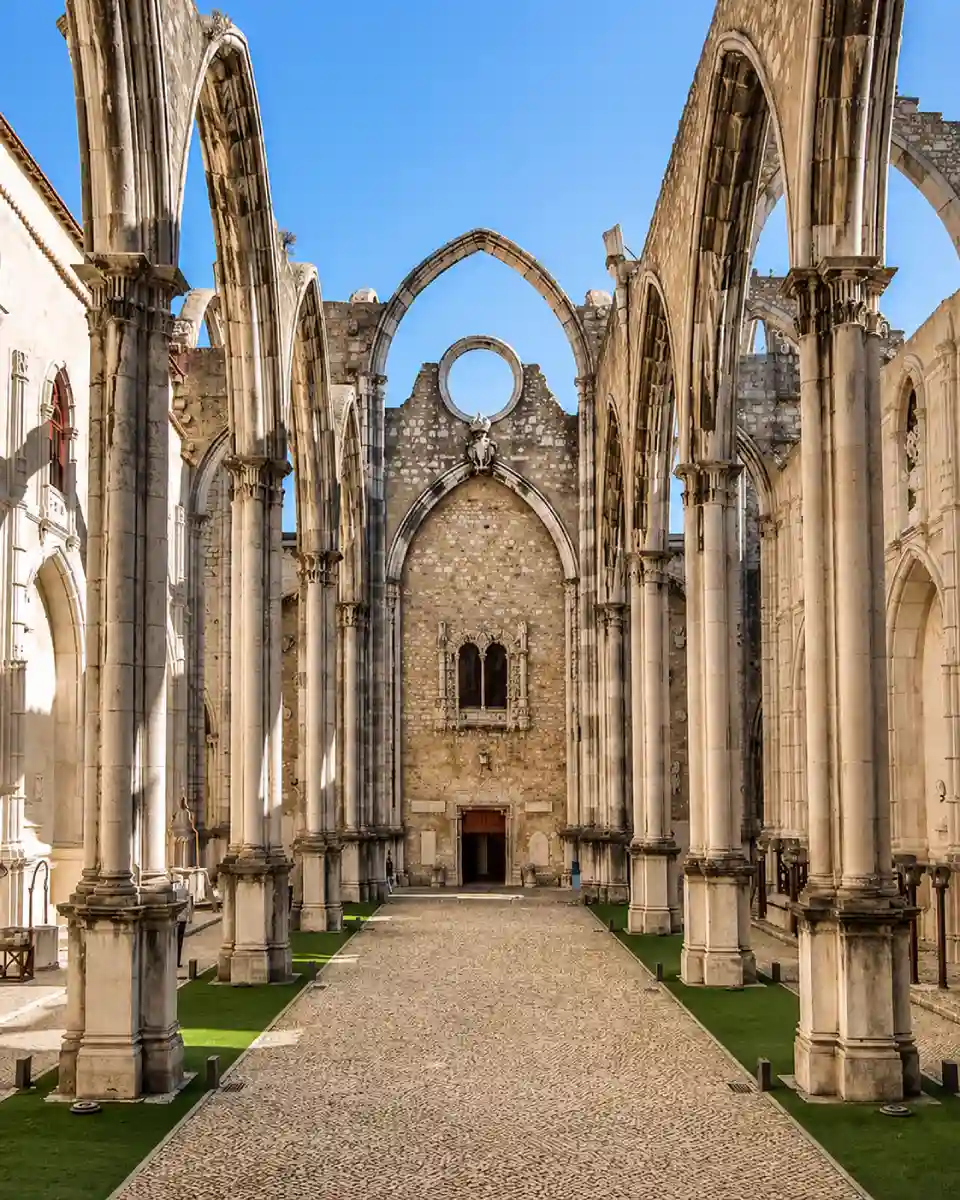
From Baixa you can reach the upper town two ways:
- The Santa Justa Lift (paid, around €5.30 round trip). The historic iron elevator still runs, but its rooftop viewing deck has been closed for renovation since 2025. Check the status before queueing.
- Walking up (free). Steep but short, and it drops you at the same level. This is what we did.
At the top, the Convento do Carmo is worth the ticket. It was one of the most beautiful Gothic churches in Lisbon until the 1755 earthquake tore its roof off, and the ruins were left open to the sky on purpose. Standing in a roofless Gothic nave is a strange and genuinely moving experience. The site is over 630 years old.
From there, wander into Chiado:
- Livraria Bertrand: the oldest operating bookstore in the world, per Guinness. Go in even if you don’t buy anything.
- Café A Brasileira: the historic 1905 café with Fernando Pessoa’s bronze statue outside. Beautiful interior, good croquettes, and prices above city average. You’re paying for the history. Accept that going in and it’s worth one visit.
- Praça Luís de Camões: the square honoring Portugal’s greatest poet, and your natural pivot toward Bairro Alto.
Tram photo tip: if you want the classic yellow tram photo without hanging off a moving one, go to Rua da Bica. A tram car sits parked on the famous steep street, so you can take your time with the shot.
Time Out Market and the Payment Trap
Time Out Market, next to Cais do Sodré station, gathers dozens of good restaurants under one roof. Mains run around €12, and it works well when a group can’t agree on one cuisine.
One important detail: Time Out Market is card only. Meanwhile the ginjinha stand and plenty of small restaurants are cash only. This city forces you to carry both, so just do it.
The Ferry Trick: Sunset at Jardim do Rio
This is my favorite tip in the whole guide, and it’s still not on most tourists’ radar.
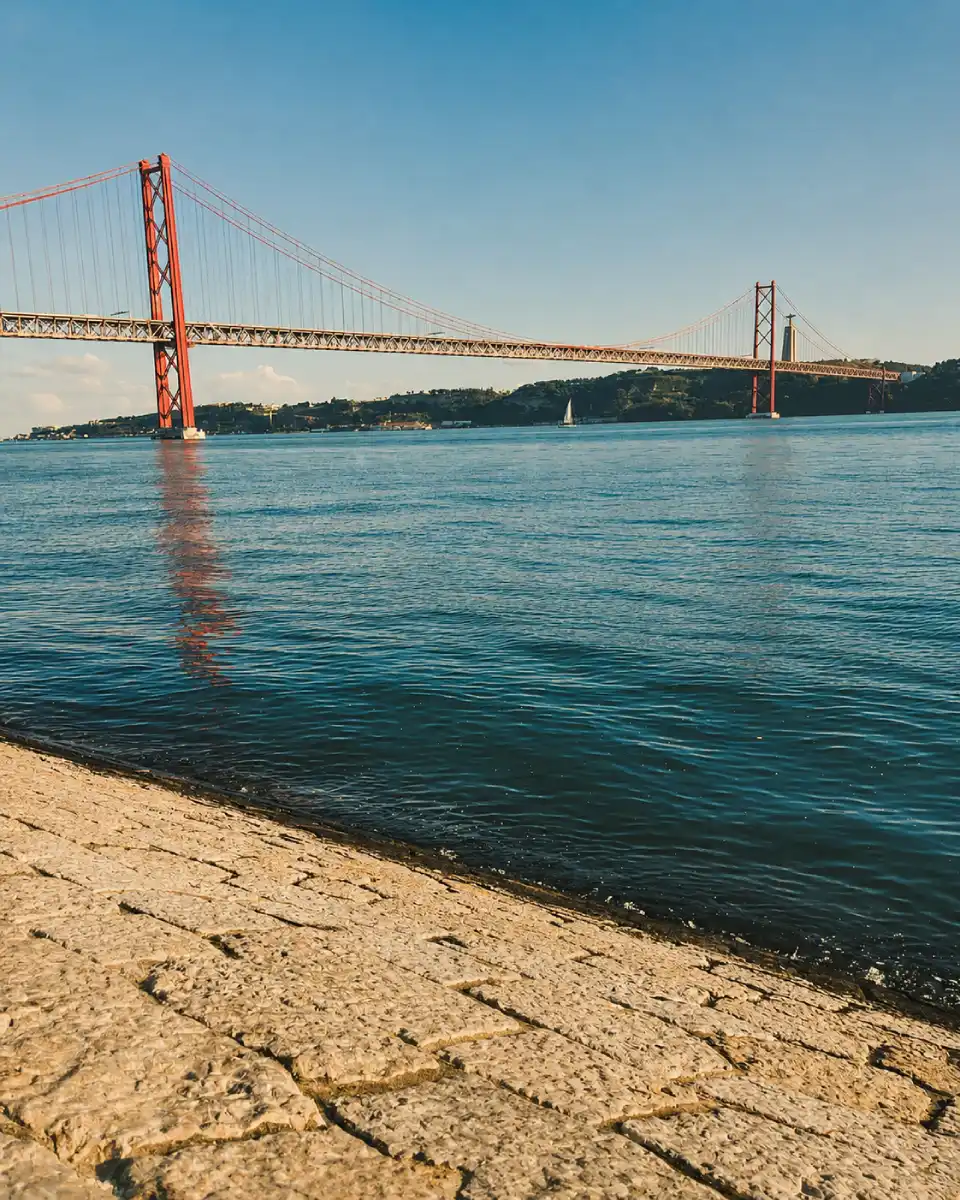
From the Cais do Sodré ferry terminal, buy a ticket to Cacilhas and take the ferry across the river. Grab a window seat, the crossing itself has great views. On the other side, walk about 15 minutes and you reach Jardim do Rio, a grassy riverside spot with a full-frontal view of the 25 de Abril bridge and the Lisbon skyline at sunset.
The money-saving part: just before the ferry terminal entrance there’s a supermarket. Wine goes for €1 to €2 a bottle, beer for under €1. Buy your drinks there, bring a towel, and have a picnic on the grass like the locals do. Compare that to €8 cocktails at a rooftop bar with the same view.
While you’re on that side of the river, Almada also has a free panoramic elevator (glass-walled) with a great view from the top, and a row of Instagram-friendly restaurants along the water if you’d rather sit down.
The €1 Restaurant
Back at Cais do Sodré there’s a chain restaurant called 100 Montaditos that deserves a mention purely for the price. The menu is cheap on any day (sandwiches from €1.60, small pizzas around €2), but here’s the golden tip: on Wednesdays and Sundays almost the entire menu drops to €1. Small sandwiches, pizza, sangria, beer, all €1 each. The portions are small, so you order several, but it’s hard to spend more than €10 here even trying.
Is it fine dining? No. Is it the cheapest meal you’ll have in Western Europe this year? Almost certainly.
Belém: The Monument District
Belém sits west along the river, and this is where Portugal’s Age of Discoveries actually happened. The ships that sailed to India and Brazil left from this stretch of riverbank, and the monuments built to celebrate all of it are the biggest in the country. Give it at least half a day.
Getting there is easy: hop on the train at Cais do Sodré and you’re at Belém station in about 7 minutes, then it’s a 10 to 15 minute walk to the riverfront. Tram 15E from Praça do Comércio works too, it just takes longer.
One thing before anything else: almost everything in Belém closes on Mondays. Don’t come on a Monday. Ask me how I know.
Torre de Belém
The tower is THE postcard of Lisbon. A 16th-century fortified gateway sitting right in the river, UNESCO World Heritage, and honestly even prettier in person than in photos.
Now, here’s where our timing was unlucky: when we visited, the tower was closed for renovation, so we could only take pictures from the outside. We took them anyway, hoping to come back one day for a better one. The good news for you is that it reopened in May 2026 after a year of restoration, and the whole visiting experience got a serious upgrade.
Entry now works on timed slots, with a max of 60 people every 30 minutes and 900 visitors a day total. Before the renovation, people regularly stood in line for over an hour. Now the waits are short, but slots can sell out, so book ahead or show up early. Adult tickets are €15, it’s free with the Lisboa Card and for kids 12 and under, and it’s open Tuesday through Sunday, roughly 9:30 to 5:30.
My honest take, since we experienced the “outside only” version: the exterior is the iconic part, and it’s completely free to see from the promenade. Inside you get a narrow spiral staircase, some small historic rooms, and a terrace view. If slots are sold out when you visit, you haven’t lost the essential experience.
Padrão dos Descobrimentos
A short walk along the river from the tower, you’ll find this massive monument shaped like the prow of a caravel, loaded with statues of Portugal’s great navigators. We saw it from the outside and took our photos, which is what most people do. If you want to ride up to the viewpoint on top, it’s about €10.
Whatever you do, don’t walk past the Rosa dos Ventos without looking down. It’s a huge mosaic compass on the ground in front of the monument, with a world map showing the Portuguese maritime routes and the year each region was reached. It’s free, it’s literally under your feet, and half the visitors miss it completely.
From there, take the underground passage across the road and you’ll come out at the Praça do Império gardens, which lead you straight to the monastery.
Mosteiro dos Jerónimos
The monastery is the giant of Belém. It’s UNESCO-listed, it was commissioned by King Manuel I to celebrate Vasco da Gama’s return from India, and the sheer scale and detail of the stonework stops you in your tracks.
An important tip: buy your ticket in advance. This is the most in-demand attraction in the whole district, and if you show up without one, you’re either standing in a very long line or you’re not getting in at the time you wanted.
But here’s the thing I really want you to know, and I’m being completely honest: the church next door to the paid section is free, and for me it was the most impressive part of the entire complex. The tombs of Vasco da Gama and Luís de Camões are in the free church, not behind the ticket. If you’re on a budget or short on time, the free church alone justifies the trip out to Belém.
Pastéis de Belém: The Original One
Okay, pastry lesson, because this actually matters here. Everywhere else in Portugal, what you’re eating is a pastel de nata. Only here, at this one shop, do you get a pastel de Belém, the original recipe from 1837, still made in-house and still a secret.
This was hands down my favorite pastry of the entire trip, and I say that as someone who taste-tested her way across the city. It comes to your table warm. The shell is super crispy, and the cream inside is still hot. It basically melts in your mouth. You can even watch the bakery making them through a window inside.
The line out front looks scary but moves fast, and there’s a big seating area inside that most people waiting for takeaway don’t even realize exists.
Where to Eat Cheap in Belém
The restaurant strip here is priced for tourists, but there’s a workaround: Pão Pão Queijo Queijo, near the monastery, does sandwiches and salads for under €6 and full plates for under €11. Nothing fancy, totally fair prices, exactly what you need between monuments.
Riding Tram 28 (Without Losing Your Wallet)
Tram 28 is the most iconic transport in Lisbon, a wooden tram that’s been running for over 100 years, rattling through the historic neighborhoods of Alfama, Graça, Chiado, and Estrela. And since it’s regular public transport, it costs a normal tram fare. It’s basically the cheapest sightseeing tour in Europe.
It’s also the most notorious pickpocket spot in the city, so let me tell you how to do it right, because how you board changes everything.
The trick is to board at the end of the line. We started at Campo de Ourique, the terminus, which means you get on an empty tram, grab a window seat, and watch the entire route unfold from the very first stop. Boarding mid-route in Alfama means squeezing into a packed car full of distracted tourists, which is exactly where wallets disappear. We also went in the late afternoon, which is noticeably calmer than mornings.
To be clear about safety: armed robbery is not really a thing here. But quiet-handed pickpocketing on a crowded tram absolutely is, the kind where someone takes your phone and you don’t feel a thing. If you see a jam-packed tram and still want on, keep your bag zipped and in front of you and your phone out of your back pocket.
The ride itself, through streets so narrow you could almost touch the buildings, was genuinely one of the best things we did in the city. And it costs almost nothing.
A Fado Night: Do This At Least Once
At least one dinner of your trip needs to be spent at a fado house. Fado is Portugal’s traditional music, born in Lisbon in the 19th century: poetic, melancholic songs about longing and fate, sung with an intensity that’s hard to describe, accompanied by the Portuguese guitar. Reading about it does nothing. Sitting in a small, dim, traditional house while a fadista sings two meters away from you does everything.
We booked a dinner-and-show package at a very traditional house. Dinner was a parade of Portuguese small plates, including classics like pica-pau, and drinks were included for the entire show, which is a detail worth checking for when you compare venues.
I won’t pretend it’s a cheap night. It isn’t. But of everything we paid for in Lisbon, this is the one I’d repeat first without thinking twice. Just book ahead, because the traditional houses are small and they fill up days in advance. One practical note: booking through one of the big tour platforms sometimes lets you pay in your home currency or split the payment into installments, so it’s worth comparing that against booking directly with the house.
The Sintra Day Trip
Sintra is the day trip everyone tells you to do from Lisbon, and everyone is right. It’s a hill town about 40 minutes away by train, packed with palaces and castles that look like they were designed for a fairy tale. It’s also the part of the trip where bad planning hurts the most, so let me walk you through how we did it and what I’d do differently.
Getting there is simple: take the train from Rossio station, and about 40 minutes later you’re at Sintra station. From there you can explore on foot, grab one of the many tuk-tuks, or do what we did and use the public bus. There’s a hop-on-hop-off bus that loops past all the main attractions for one fixed price, and you can get on and off as many times as you want all day. The stop is right next to the train station. We paid around €13, and then found out it’s cheaper if you buy online. Learn from us.
Now, the single most important thing to know about Sintra: almost every attraction is paid, has timed-entry tickets, and sells out. Buy everything online in advance. If you show up planning to buy at the door, you’ll face long lines and probably won’t get the time slot you want, or any slot at all in high season.
Quinta da Regaleira
This was the first stop and one of the most fascinating places of the whole trip. The estate has gardens, tunnels, a palace, and the thing everyone comes for: the Initiation Well. It’s a 27-meter-deep inverted tower with a spiral staircase winding down its walls, built for Masonic initiation rituals. The levels are supposed to represent a spiritual journey from darkness into light, and you descend the whole thing and exit through secret tunnels. Photos don’t prepare you for standing at the bottom looking up.
Your ticket also covers the gardens and the palace itself, which has impressive architecture and original furniture inside. Don’t rush this place. There’s more to see than you expect.
Castelo dos Mouros
The next stop sits at the top of the hill, and I mean the top. The Moorish Castle is a fortification from the 10th century, built to protect Lisbon and the surrounding region, and walking its walls means walking on a structure built more than a thousand years ago. Because it crowns the Serra de Sintra, the panoramic view over the town is unbeatable. Look closely at the rock openings along the walls: the Moors used them to store food.
A word about footwear, because this is the part of the guide where it stops being a suggestion: Sintra is all stone paths, stairs, climbs, and descents. Even using the bus, you walk a lot. My mom wore sneakers and was fine. I wore sandals and tripped repeatedly. Wear real shoes.
Palácio da Pena
Pena Palace is the grand finale, the red-and-yellow castle on the hilltop that’s on the cover of every Portugal guide. It was built by King Ferdinand II as a summer residence, and inside you can walk through the main rooms: the king’s and queen’s quarters, a palace kitchen the size of an apartment, bathrooms more refined than most hotels.
Here’s the tip that can save your entire visit, because the ticket system here is unforgiving: arrive at least one hour before your ticket time. Our slot was 4:00 PM, and being there by 3:00 was the right call. The palace sits at the very top of the hill, and getting up there is not quick. There’s a shuttle bus that costs €3 extra and only takes you halfway, and you walk the rest. And they do not accept latecomers. Show up at 4:15 for a 4:00 ticket and you’ve lost it. No refund, no sympathy.
One more honest note: if you just want photos with that famous red-and-yellow facade, you don’t need a ticket at all. The exterior and the surrounding terraces can be reached without paying, and the facade is the photogenic part. The paid ticket is for the interior.
The Sintra Sweets
In town, there’s a traditional pastry shop called Periquita that’s been around for over 160 years, famous for two local specialties: the travesseiro (a puff pastry “pillow” with almond cream) and the queijada (a small cheese tart). We tried both there, and honestly? I expected more. They were fine, not amazing. But we also bought the same two sweets at Time Out Market back in Lisbon for €2.20 each and enjoyed those, so try them somewhere and form your own opinion. They’re part of the Sintra experience either way.
Should You Do Sintra Solo or With a Tour?
Real talk, because we did it solo and I have thoughts. Can you do Sintra on your own? Absolutely, we did, and this guide gives you everything you need. But if you want to hit several attractions in one day, the logistics get stressful. Every ticket has a fixed time slot, you depend on a bus with a loose schedule, and you spend the day doing math in your head about whether you’ll make the next entry. It was a great day. It was also a rushed one.
When we priced it out afterward, a guided day tour that includes transport, a guide, the attraction tickets, and even adds Cascais on the way came out worth it compared to doing the puzzle yourself. For the day trip in the next section, we went guided for exactly that reason, and it was the more relaxing day by far. So: solo if you love independence and don’t mind the hustle, guided if you want to actually relax.
The Day Trip: Fátima, Batalha, Nazaré, and Óbidos
For our last full day, we took a guided day tour out of Lisbon covering four towns, and this is the day where having a guide genuinely paid off, both for the logistics and for the stories behind each stop.
Fátima was first, about an hour and a half from Lisbon. It’s one of the most important Catholic pilgrimage sites in the world, built where Our Lady is said to have appeared to three shepherd children in 1917. Even if it’s not your religion, the place carries a genuinely moving energy, and the guide’s telling of the full story made it land differently than reading a plaque would. A tip I’m glad someone gave us: bring small empty bottles. There’s a fountain where you can fill up holy water for free to take home or give as gifts. The little bottles sold nearby run €1.50 to €2.50, so bringing your own is a small but satisfying win.
Batalha came next, with its stunning monastery built in gratitude for Portugal’s independence. The architecture grabs you outside and in, and King João I is buried there.
Nazaré is the town famous for the giant waves you’ve seen in surf videos. Here’s what nobody tells you: those monster waves are a winter phenomenon. We went in the warm season and the sea was flat as a pool. If big-wave watching is your goal, come between roughly October and March. We used the stop to visit the sanctuary and have lunch, which isn’t included in the tour.
My mom ordered sardines and they were great. I got ambitious and ordered açorda, a traditional dish of bread mash with seafood and a soft egg yolk on top. I’ll be honest with you the way I’d be honest with a friend: Portugal has a lot of delicious food, and this is not one of them. Try it anyway. Maybe you’re braver than me, and you’ll enjoy.
Óbidos was the final stop and my favorite of the four. It’s a walled medieval village with flower-lined cobblestone streets, a castle, and little shops you want to walk into one by one. It genuinely looks like a movie set. The local tradition here is ginja de Óbidos, the cherry liqueur served in a small chocolate cup, so you drink the shot and eat the glass. Our guide bought one for each of us, and it’s the right way to end that town.
The Final Practical Stuff
A few last things that don’t fit anywhere else but will save you real annoyance:
The airport, again. I said it in Phase 1 and I’m repeating it because it matters: for your flight home, get to Lisbon airport 4 hours early, not the standard 3. The security line and the passport control line are both long and slow, and they don’t care about your boarding time.
Plugs and time. Portugal uses the standard European two-pin plug (Type F, 230V), so if you’re coming from Germany or anywhere in continental Europe, everything just works. Coming from the US or UK, bring an adapter. Portugal runs one hour behind Germany and most of Central Europe, which is a pleasant little bonus: you land and gain an hour.
Mondays, one last time. A lot of attractions and plenty of restaurants treat Monday as their rest day. If your trip includes a Monday, check the opening days of anything you’ve planned before you build your day around it.
Tax-free shopping. Portugal participates in tax-free shopping for non-EU residents. If that’s you and you buy anything significant, ask for the form at the store and process it at the airport before flying home for a VAT refund.
And one last honest tip: if Lisbon wins you over the way it won us over, look at adding Porto to the trip. It’s an easy train ride north and it completely stole our hearts. But that’s a whole other guide.
What We Spent: A Realistic Lisbon Budget
I promised the money talk, so here it is. All prices are per person and from our 2026 trip, so treat them as a solid baseline rather than gospel.
Flights. From Germany, we’ve seen direct returns under €100 with the low-cost carriers if you book a few weeks out. TAP and Lufthansa from Frankfurt or Munich run higher, usually €150 to €250 return, but you get checked luggage and normal legroom.
Accommodation. This is where Lisbon surprises you in both directions. Central hotels in Baixa and Chiado in high season are not cheap anymore, easily €150 to €250 a night for something nice. Our palace hotel in Oeiras came out meaningfully cheaper than an equivalent property in the center would have, and that’s the point I keep making: search beyond the center and your money buys a different category of hotel. Budget travelers can find good guesthouses and private rooms from around €60 to €90 a night.
Getting around. Almost negligible. Single metro and train rides cost under €2 with the Viva Viagem card, and even riding trains to Belém and the coast daily, we spent maybe €5 to €8 a day on transport. The ferry to Cacilhas is a couple of euros each way. If you go the Lisboa Card route instead, that’s €27, €44, or €54 for 24, 48, or 72 hours, and you already know my advice: do the math first.
Attractions. Here’s roughly what the big ones cost, per adult:
- São Jorge Castle: €15
- Belém Tower: €15 (free with Lisboa Card)
- Jerónimos Monastery: around €18 for the paid cloisters, €0 for the church with the famous tombs
- Padrão dos Descobrimentos viewpoint: about €10
- Quinta da Regaleira: around €15
- Moorish Castle: around €12
- Pena Palace with the interior: around €20, plus €3 for the shuttle up the hill
- Sintra hop-on-hop-off bus: around €13, cheaper online
So a full sightseeing day in Lisbon runs €15 to €30 in entries, and the Sintra day is the expensive one at €50 to €60 in tickets and buses before you’ve eaten anything. The guided day trips (Sintra with Cascais, or the Fátima–Nazaré–Óbidos loop) generally land somewhere in the €70 to €100 range including transport and guide, which is exactly why the math against going solo is closer than you’d think.
Food. This is the category with the widest spread I’ve seen in any European capital, and it’s why Lisbon works for any budget:
- Pastéis de nata: €1.50 to €2.20 each, and you will eat many
- 100 Montaditos on a Wednesday or Sunday: a full meal for €5 to €10
- Simple traditional lunch (like our sardines and bacalhau in Alfama, or Pão Pão Queijo Queijo in Belém): €8 to €12
- Time Out Market: mains around €12
- Supermarket picnic at Jardim do Rio: wine for €1 to €2, beer under €1, honestly the best price-to-view ratio in Europe
- Fado dinner and show: expect €50 to €75 per person at a traditional house with drinks included
- Café A Brasileira and other historic spots: above city average, you’re paying for the walls
The bottom line. Excluding flights and hotel, we averaged roughly €40 to €60 per person per day on a normal city day (transport, entries, three meals, pastries, because pastries are non-negotiable). The Sintra day and the fado night were the two spikes. A determined budget traveler using the free churches, the miradouros, the picnic trick, and the €1 restaurant could genuinely do Lisbon on €25 a day and not feel deprived, which is something I can’t say about many capitals in Western Europe.
Final Thoughts
Lisbon is one of those cities that delivers on every level: history you can physically climb on, food that ranges from €1 sandwiches to unforgettable tasting menus, free viewpoints that beat paid observation decks in other capitals, and day trips that feel like bonus countries. It’s also a city that rewards a little planning, because between timed tickets, Monday closures, and renovation schedules, the difference between a smooth trip and a frustrating one is mostly knowing what to book ahead.
Now you know. Go watch that sunset from the castle walls.