


Lisbon is a great city, but choosing where to stay isn’t as straightforward as just picking a hotel in the center.
A hotel can look absolutely stunning in photos and have lots of great reviews, but still turn out to be a poor choice for your trip. It might be halfway up a hill, the nearest metro station could be a long walk away, or there could be a bar right underneath your room.
If you’ve never been to Lisbon, it’s easy to underestimate how much the area you stay in can affect your day.
I recommend choosing the area first, then looking for hotels there.
This guide compares the eight most popular places to stay in Lisbon. I’ll cover what makes each area worth considering, the drawbacks, and a few things to check before you book.
Where Should You Stay in Lisbon? A Quick Comparison
| Neighborhood | Best for | What to know |
| Baixa | First-time visitors | Central, easier walking, busy |
| Rossio | Sightseeing + Sintra | Excellent transport connections |
| Chiado | Couples + shopping | Stylish, central, some hills |
| Bairro Alto | Nightlife | Busy bars, noisy evenings |
| Alfama | History + atmosphere | Beautiful but VERY hilly |
| Cais do Sodré | Food + nightlife | Great transport, busy at night |
| Avenida da Liberdade | Comfort + upscale hotels | Spacious, often expensive |
| Belém | Quiet stays + history | Farther from the old center |
For the majority of first time visitors I’d say the choices are pretty much down to Baixa, Rossio, Chiado or Avenida da Liberdade.
But there’s a good reason to consider the others, depending on the type of trip you’re after.
1. Baixa: Best for First-Time Visitors
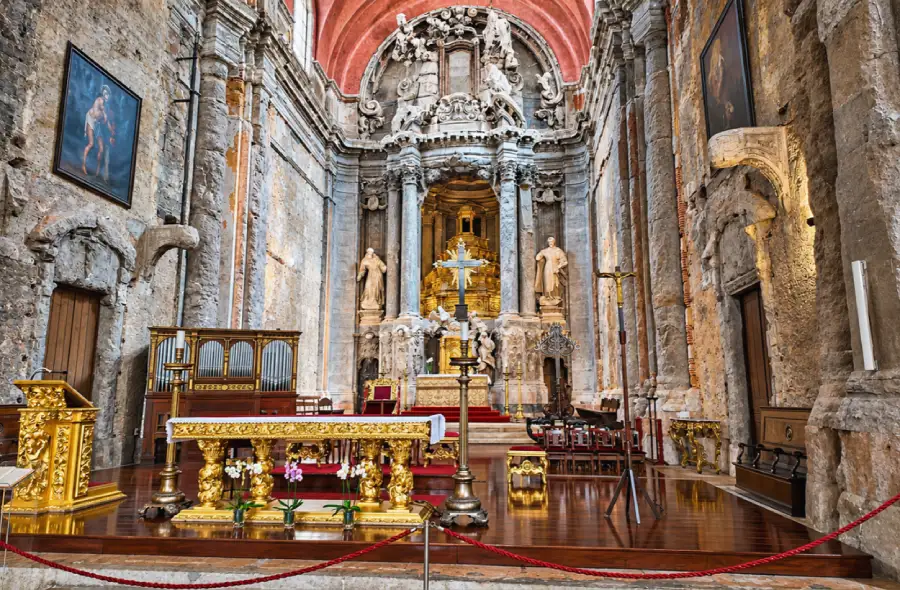
Baixa is right in the middle of Lisbon, between the river and Rossio. It’s probably the easiest area to get around in, with wide streets, a lot of old buildings, shops, restaurants, and all sorts of things to see in the vicinity.
You’ll be within walking distance of Praça do Comércio, Rua Augusta, the Santa Justa Lift, and several of Lisbon’s main shopping streets.
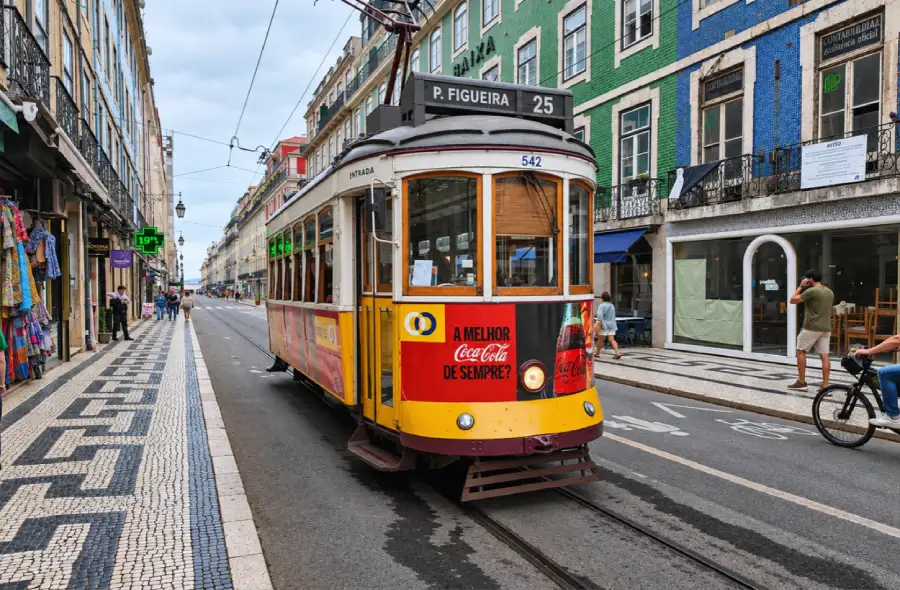

And here’s something to be aware of: Baixa is fairly flat.
That may not seem that important when you’re booking a hotel, but after a full day of exploring Lisbon’s hills, it can make a difference.
You can easily spend the morning exploring nearby attractions, return to your hotel for a break, and head out again for dinner.
There are also metro stations in the vicinity (Baixa-Chiado and Rossio), so it’s easy to get to other parts of the city.
What I Would Consider Before Booking
Baixa is convenient, but it can feel very touristy.
Rua Augusta, in particular, is filled with restaurants, souvenir shops, and visitors throughout the day. It’s lively, but probably not the place to stay if you’re hoping for a quiet neighborhood atmosphere.
I recommend looking for accommodation on a side street rather than directly overlooking one of the busiest pedestrian areas.
My verdict: For a first visit of two or three days, Baixa is hard to beat. You can cover plenty of Lisbon without spending half your time traveling between attractions.
2. Rossio: Best for Sightseeing and Visiting Sintra
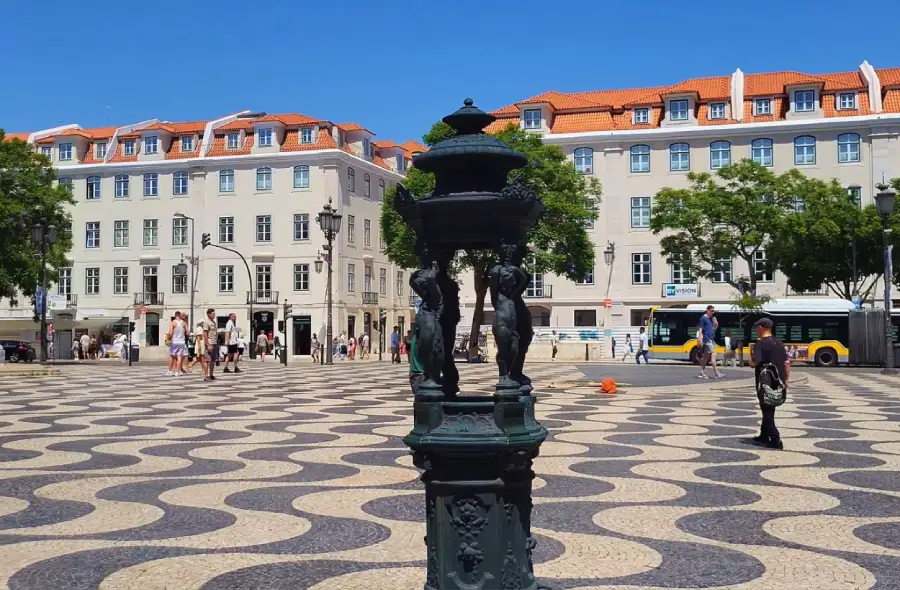
Rossio is right beside Baixa, so the two areas share many advantages. You’re central, have easy access to restaurants and shops, and can walk to several popular attractions.
The main difference is the transport.
Rossio Train Station is one of Lisbon’s departure points for trains to Sintra, making this neighborhood particularly useful if you’re planning to visit Pena Palace or Quinta da Regaleira.
You won’t need to cross the city early in the morning just to catch your train.
The station itself is worth seeing, too. Its beautiful stone facade has two impressive horseshoe-shaped entrances.
Nearby, Rossio Square (Praça Dom Pedro IV) is surrounded by attractive buildings and cafés, with Lisbon’s famous wave-patterned pavement covering much of the square.
It’s a busy area, but I think the convenience makes it worth considering.
Is Rossio a Good Place to Sleep?
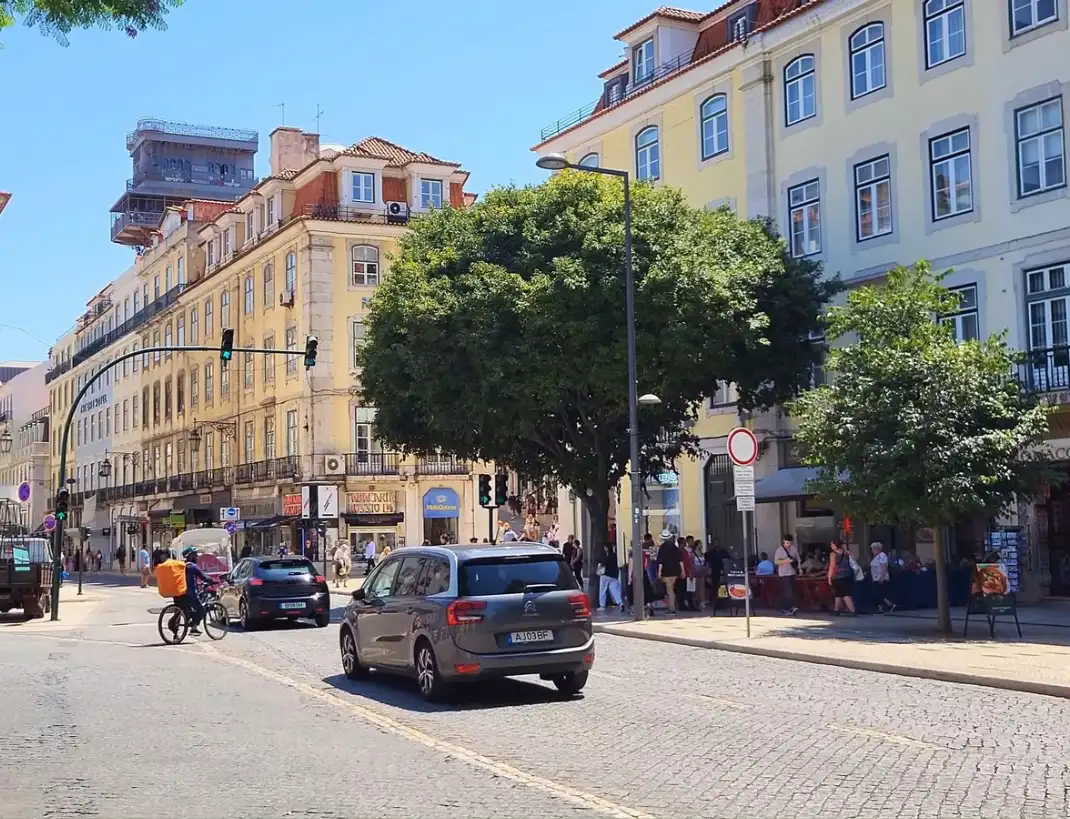
Yes, although I’d pay attention to the exact hotel location.
Some streets around the main squares and roads are busy well into the evening. If you’re sensitive to noise, check whether the hotel has soundproof windows and read recent guest reviews.
There are also several metro connections within the surrounding area.
3. Chiado: Best for Couples, Cafés, and Shopping
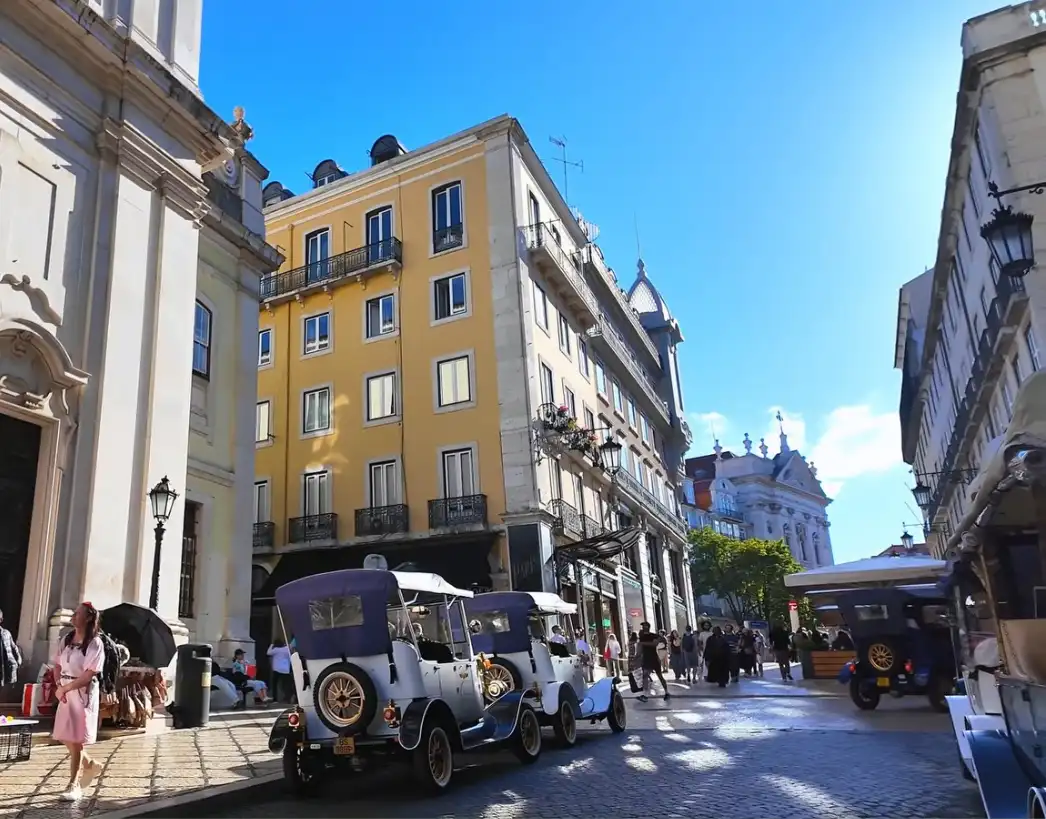
Chiado is one of the prettiest parts of central Lisbon, with elegant buildings, historic cafés, bookstores, boutique shops, and restaurants.
It’s a bit more refined than Baixa, though it’s still very much in the heart of the city centre.

You can stop for coffee at A Brasileira, browse the shops along Rua Garrett, or visit the ruins of Carmo Convent.
There’s loads to do in the vicinity, and you’re only a short distance from both Baixa and Bairro Alto.
For couples, I think Chiado is an especially appealing choice.
You can spend the day sightseeing and still have plenty of places for dinner within walking distance of your hotel.
And if you enjoy shopping, you’ll find a good mix of international brands and smaller independent stores.
The Catch? There are Hills Again.
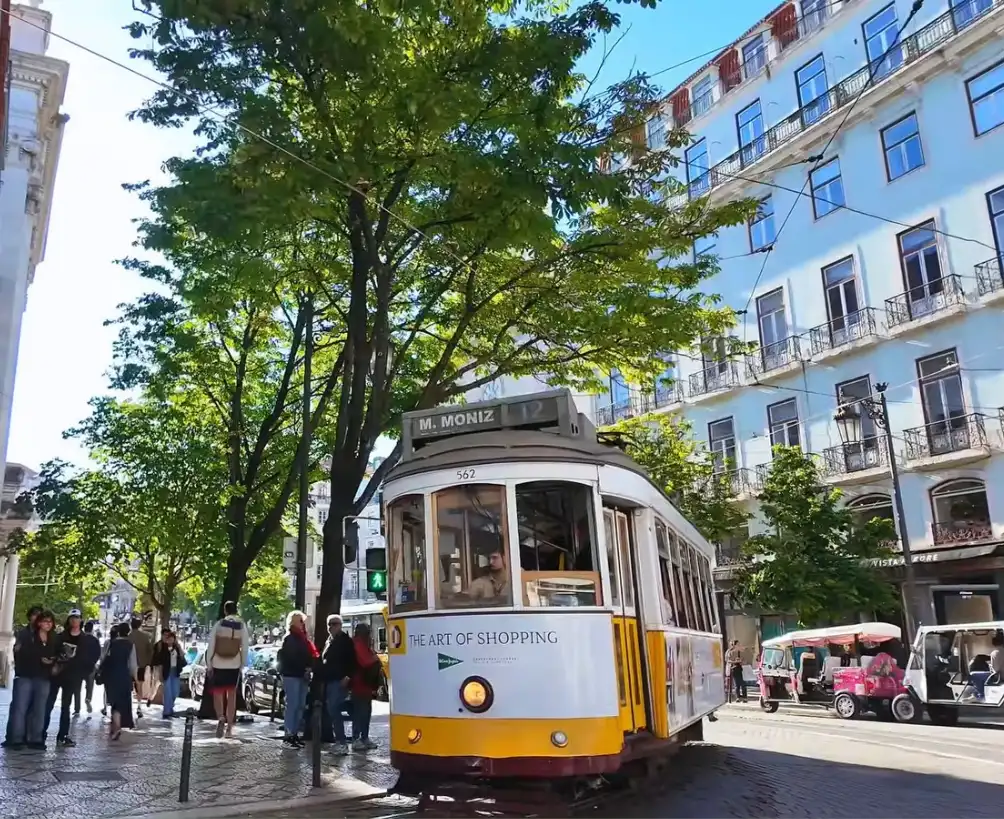
Chiado sits above Baixa, so walking between the two neighborhoods involves a climb.
Even Baixa-Chiado metro station has entrances at different levels, which is worth remembering when you’re carrying luggage.
Accommodation can be expensive around here, especially in the refurbished historic buildings.
If you’re booking an apartment, check whether there’s an elevator. Some older properties have narrow staircases and several floors.
It’s central, attractive, and has plenty going on without being quite as nightlife-focused as Bairro Alto.
4. Bairro Alto: Great for Nightlife, Not Always for Sleep

Bairro Alto has two very different faces.
By day it’s a village of narrow cobbled streets, colorful buildings, shops and restaurants.
But by evening, the bars are full, the music spills out onto the streets, and it’s one of Lisbon’s key nightlife areas.
If you’re the type of person who likes going out for a drink and staying up late, then it’s absolutely ideal.
You can walk from one bar to the next, grab a late-night snack, and be back at your accommodation without worrying about getting across the city.
But would I book a hotel here for a quiet weekend? Probably not.
Some streets get VERY noisy at night, especially on Fridays and Saturdays.
And when I say noisy, I don’t just mean traffic. People often gather outside bars, so even a room on an upper floor might not be peaceful.
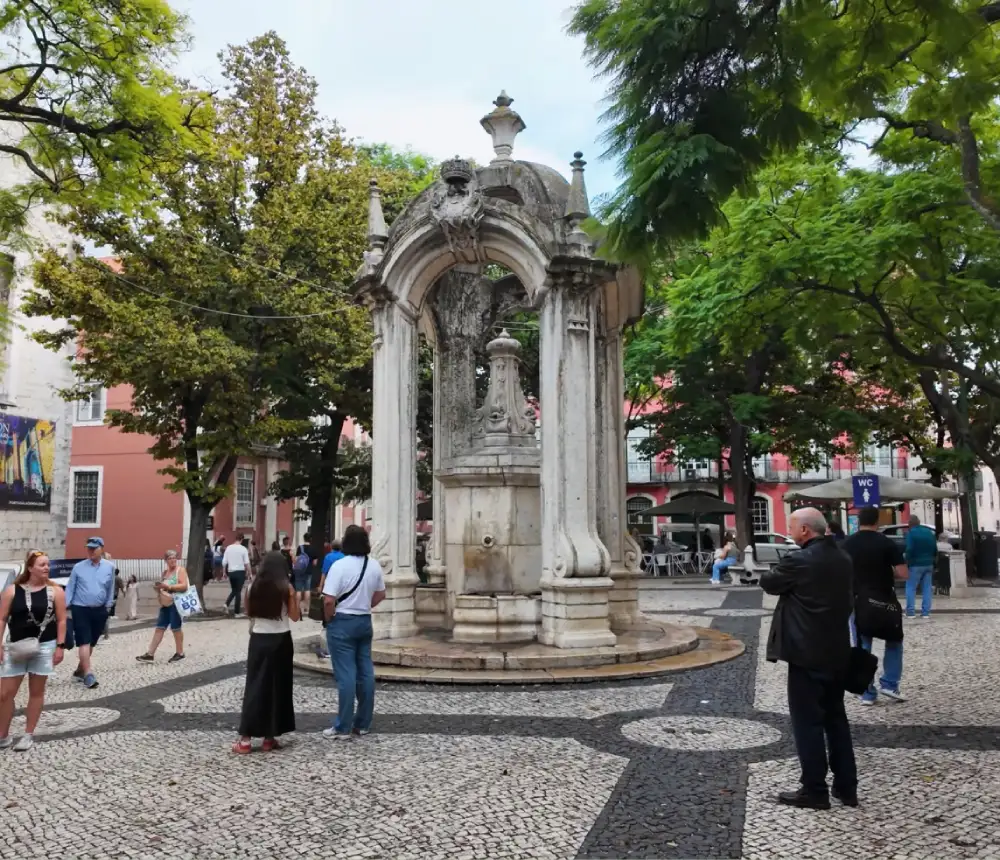
Of course, not every street has the same problem.
If you find a hotel here that you love, check its exact location and search guest reviews for comments about nighttime noise.
5. Alfama: The Most Atmospheric Place to Stay in Lisbon

If there’s one Lisbon neighborhood that looks incredible in photographs, it’s Alfama.
Narrow streets wind between old buildings, colorful tiles cover the walls, and balconies hang above passageways that sometimes seem barely wide enough for two people.
You’ll find small restaurants, traditional fado houses, historic churches, and viewpoints overlooking the Tagus River.
Miradouro de Santa Luzia is particularly beautiful, with its tiled terrace and views across the rooftops.
Nearby, the Portas do Sol viewpoint is another excellent place to stop and admire the city.


And of course, São Jorge Castle is located on the hill above the historic streets.
Alfama is the kind of neighborhood where exploring slowly makes more sense than following a strict schedule.
Why I Would Think Twice About Booking Here
The same streets that make Alfama beautiful can make it difficult to reach your accommodation.
There are STEEP hills, long staircases, and narrow roads that cars can’t always access.
If you’re staying high up in the neighborhood, you might need to carry your luggage some distance from the nearest drop-off point.
That isn’t much fun with a heavy suitcase, especially in the summer heat.
It’s also worth checking the property’s access. An apartment might have wonderful views but require several flights of stairs.
Public transport serves the edges and some streets of Alfama, but there isn’t a metro station right in the middle of its old lanes.
Who Should Stay in Alfama?
I’d recommend it to travelers who value atmosphere over convenience.
If you enjoy photography, historic architecture, traditional Portuguese music, and wandering through old streets, Alfama has plenty to offer.
But if you struggle with hills or want to get around Lisbon as easily as possible, Baixa or Rossio would be more practical.
For me, Alfama is an area where the exact address matters more than the neighborhood name.
A hotel near a main road can be fairly easy to reach, while another property just a few streets away could involve a serious climb.
6. Cais do Sodré: Best for Food, Nightlife, and Easy Day Trips

Cais do Sodré has become one of Lisbon’s busiest areas for eating, drinking, and going out.
It’s located near the river, just west of Baixa, and has several attractions within walking distance.
One of the main draws is Time Out Market, a large food hall inside Mercado da Ribeira.


You can find Portuguese dishes, seafood, pastries, and food from several well-known restaurants, all in one place.
It’s convenient if you’re traveling with friends or family and everyone wants something different.
Just don’t expect it to be quiet during popular meal times.
A short walk away is Pink Street, known for its colorful pavement and bars.
It’s a popular nightlife spot, although I wouldn’t necessarily choose a room directly above it.
The Transport Is a BIG Advantage

Cais do Sodré is particularly useful if you’re planning a trip to Cascais.
The train line along the coast starts here, passing through places such as Belém, Carcavelos, and Estoril before reaching Cascais.
You’ll also find a metro station and ferry connections across the Tagus River.
That makes it a convenient base if your trip combines Lisbon sightseeing with a day at the beach.
But if peaceful evenings are important to you, choose your hotel carefully or consider staying farther from the busiest bars.
7. Avenida da Liberdade: Best for Comfort and Upscale Hotels

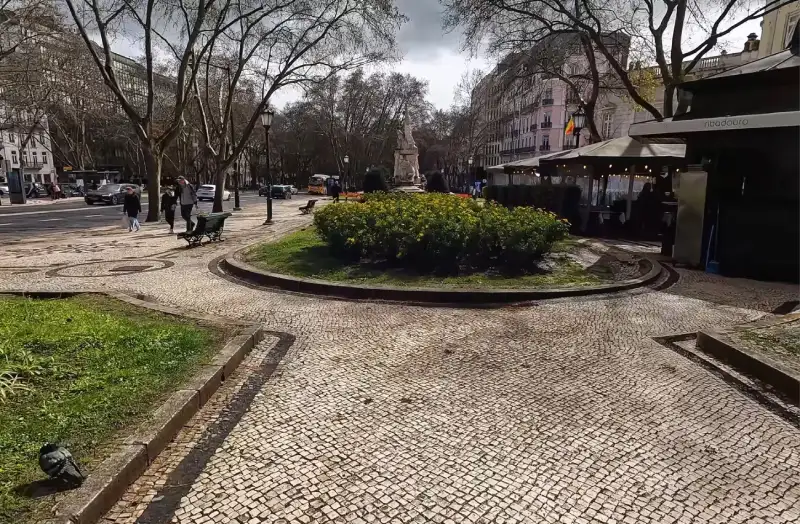
Avenida da Liberdade feels quite different from Lisbon’s historic neighborhoods.
Instead of narrow streets and tightly packed buildings, you’ll find a beautiful boulevard lined with trees, designer shops, impressive buildings, and elegant hotels.
The sidewalks are wide, with shaded areas that make walking more comfortable during warmer weather.
It’s also one of the city’s main luxury shopping districts.
But I think the biggest advantage is its central location and more spacious setting.
You’re not surrounded by the same narrow streets as Alfama, and the area feels less concentrated around tourist attractions than Baixa.
The avenue runs between Restauradores and Marquês de Pombal, with metro stations along the way.
If you stay closer to Restauradores, you’ll be within easy walking distance of Rossio and parts of central Lisbon.
Hotels near Marquês de Pombal are farther uphill, so check the exact location before booking.
Is It Worth Paying More?
That depends on what you want from your hotel.
Avenida da Liberdade has plenty of upscale accommodation, so it isn’t usually the first place I’d search for a very tight budget.
However, some hotels offer practical advantages, such as elevators, air conditioning, larger rooms, and parking.
And if you’re traveling with family or carrying several suitcases, convenience can be worth paying for.
One thing I’d definitely check is whether the hotel overlooks the main avenue. Some properties may have traffic noise, even though the surrounding area feels more relaxed than the nightlife districts.
You won’t be surrounded by the same historic atmosphere as Alfama, but you’ll have a convenient base for exploring Lisbon.
8. Belém: Beautiful, Quiet, but Farther From Central Lisbon
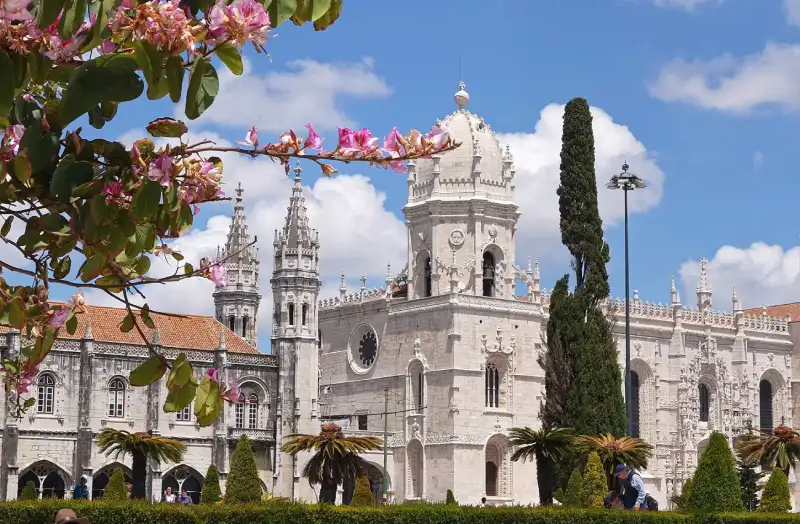
Belém is one of Lisbon’s most interesting areas, particularly if you enjoy history, architecture, and waterfront walks.
It’s home to two famous monuments: Jerónimos Monastery and Belém Tower.
You’ll also find the Monument to the Discoveries, several museums, gardens, and wide pedestrian areas near the river.
And yes, this is where you’ll find the famous Pastéis de Belém bakery.

If you’re planning to visit the monuments, I recommend leaving time to stop for a custard tart. They’re served with cinnamon and powdered sugar, and the bakery is one of the best-known places in Portugal for them.
Compared with central Lisbon, Belém generally feels more open and less packed with narrow streets.
Why I Wouldn’t Make It My First Choice
Belém isn’t within easy walking distance of the main historic neighborhoods.
If you stay here, you’ll need to use trains, buses, trams, or taxis to reach places like Baixa, Chiado, and Alfama.
That isn’t a major problem if you enjoy a slower trip, but it does mean spending extra time traveling each day.
And if you only have two or three days in Lisbon, that time matters.
For a first trip focused on exploring central Lisbon, I’d prefer somewhere closer to Baixa.
How Much Should You Budget for a Hotel in Lisbon?
Hotel prices in Lisbon depend heavily on your travel dates.
Summer, popular holiday periods, and busy weekends can be expensive, especially in central neighborhoods.
And there’s a BIG difference between renting a hostel bed, booking a private guesthouse room, and staying in a four-star hotel.
As a general guide:
| Type of stay | What to expect |
| Hostels | Cheapest option, particularly shared dorms |
| Guesthouses | Often good value, but check facilities |
| Mid-range hotels | Private rooms, usually more amenities |
| Boutique hotels | Prices vary widely by location and quality |
| Luxury hotels | Higher prices, especially around Avenida da Liberdade |
I wouldn’t pick a hotel just because it’s cheap.
A cheaper room in a tough location might mean more taxi rides, longer walks, or carrying your bags up lots of stairs.
That doesn’t make an expensive hotel automatically better, either.
Compare what you’re getting for the total price.
A comfortable room near the metro might be a better deal than a pricier hotel with great photos but a bad location.
Don’t Forget Lisbon’s Tourist Tax
Lisbon charges an accommodation tax of €4 per person, per night for guests aged 13 and over, up to a maximum of seven nights per stay.
For example, two adults staying four nights would pay €32 in tourist tax, unless it’s already included in their booking.
It’s worth checking this before you arrive, particularly if you’re trying to keep to a strict budget.
You can find more information on the Lisbon City Council website.
What I Would Check Before Booking ANY Hotel in Lisbon

There are a few things I’d pay special attention to when choosing accommodation here.
Check the Walking Route, Not Just the Distance
A hotel just 600 meters from an attraction might sound perfect.
But what if most of that walk is uphill?
Lisbon’s hills can make short distances feel much longer. Before you book, check Google Maps to see the route between your hotel, the nearest metro, and the sights you want to visit.
If you can, check the elevation and use Street View to get a better sense of the street.
Check for an Elevator
Some of Lisbon’s most charming hotels are inside older buildings.
That can mean narrow stairs, several floors, and no elevator.
If you’re traveling with large luggage, ALWAYS check this before paying.
Don’t assume a hotel has an elevator just because it looks modern inside.
Take Noise Complaints Seriously
A central hotel might be convenient during the day but frustrating at night.
Look through recent guest reviews and search for words such as noise, bars, music, traffic, and windows.
This is especially important around Bairro Alto and Cais do Sodré.
Don’t Forget Air Conditioning
Lisbon can get hot during summer, and some older guesthouses don’t have air conditioning.
If you’re visiting in July or August, I’d make this one of the first things to check.
Also, verify whether the room has its own AC unit or whether the property simply advertises general climate control.
Where I’d Stay in Lisbon for 3 Days vs. a Full Week
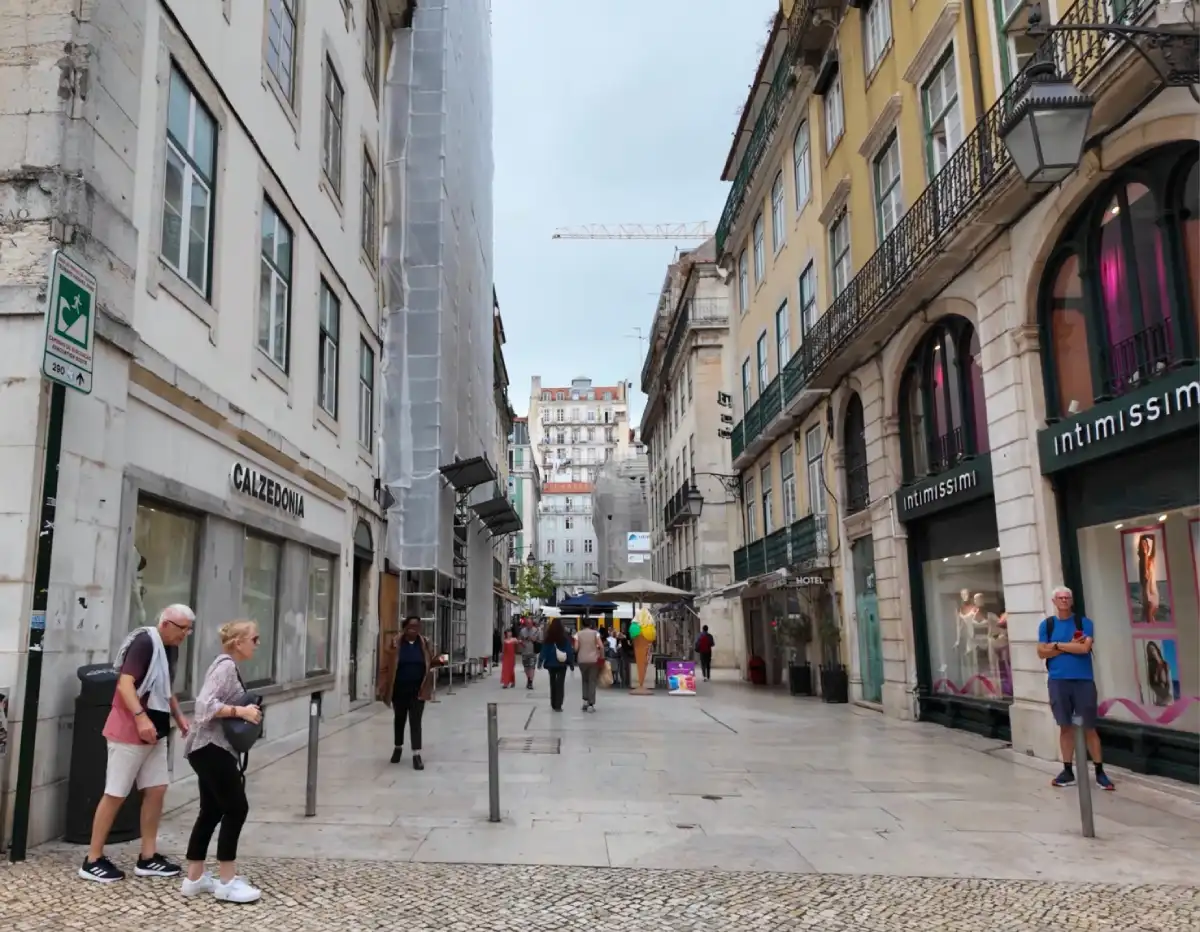
I stayed in Lisbon last year, and if there’s one thing I’d pay attention to when booking again, it’s the hotel location. A beautiful room is great, but nobody wants to spend half their trip climbing hills just to get back to it.
For a two- or three-day trip, I’d stick to Baixa or Rossio. Both are central, well connected, and close to many of Lisbon’s main attractions.
A few hotels I’d consider are:
- Hotel da Baixa: A lovely boutique hotel on Rua da Prata, with Praça do Comércio and Rossio within walking distance. Great for a first visit.
- My Story Hotel Rossio: Right on Rossio Square. I’d choose this one if I had a day trip to Sintra planned, since the train station is just nearby.
- Bairro Alto Hotel: A more luxurious option between Chiado and Bairro Alto, with a beautiful rooftop terrace. Definitely one I’d consider for a romantic weekend.
Now, if I had five to seven days, I’d be a bit more flexible.
Personally, I’d lean toward Avenida da Liberdade. It’s a beautiful tree-lined boulevard with wider sidewalks, lovely hotels, and a calmer atmosphere than the busiest parts of Lisbon.
BessaHotel Liberdade would be one of my first choices, especially because it’s close to Restauradores. 138 Liberdade Hotel is another option I’d consider if I wanted something more upscale.
For a different experience, there’s LX Boutique Hotel in Cais do Sodré. You’re close to Time Out Market, restaurants, and the train to Cascais, which is handy if you want to spend a day by the coast.
And then there’s Memmo Alfama. The rooftop views over Lisbon’s red rooftops and the Tagus River are beautiful. It’s probably the one that would tempt me most for a romantic stay, although those Alfama hills are no joke (especially with a suitcase).
One thing I wouldn’t do is book purely based on hotel photos. Check the exact street, nearby transport, and recent reviews before paying. In Lisbon, two hotels just a few streets apart can offer very different experiences.
For a short trip, I’d prioritize location. For a full week, I’d be willing to spend a bit more on comfort, especially if I planned to spend my days exploring the city.
My Final Thoughts: Which Lisbon Neighborhood Is Best?
If I had to pick just three areas, I’d go with Baixa, Chiado, and Avenida da Liberdade, each for a different reason.
Baixa is the practical choice. It’s central, mostly flat, and great for first-time visitors.
Chiado is perfect if you want cafés, restaurants, shopping, and pretty streets all within walking distance.
Avenida da Liberdade would be my choice for a more comfortable hotel, especially if I wanted somewhere a bit quieter.
But that doesn’t mean you should skip Alfama, Rossio, or the other neighborhoods.
It really depends on your budget, how long you’re staying, and what kind of trip you want.
My main advice is to look beyond the hotel photos.
Check the street, the hills, the transport, and recent reviews. These details might seem dull when you’re excited to plan your Lisbon trip, but they can make your stay a lot more comfortable.
Once you’ve sorted your accommodation, you can focus on the fun part—exploring Lisbon.